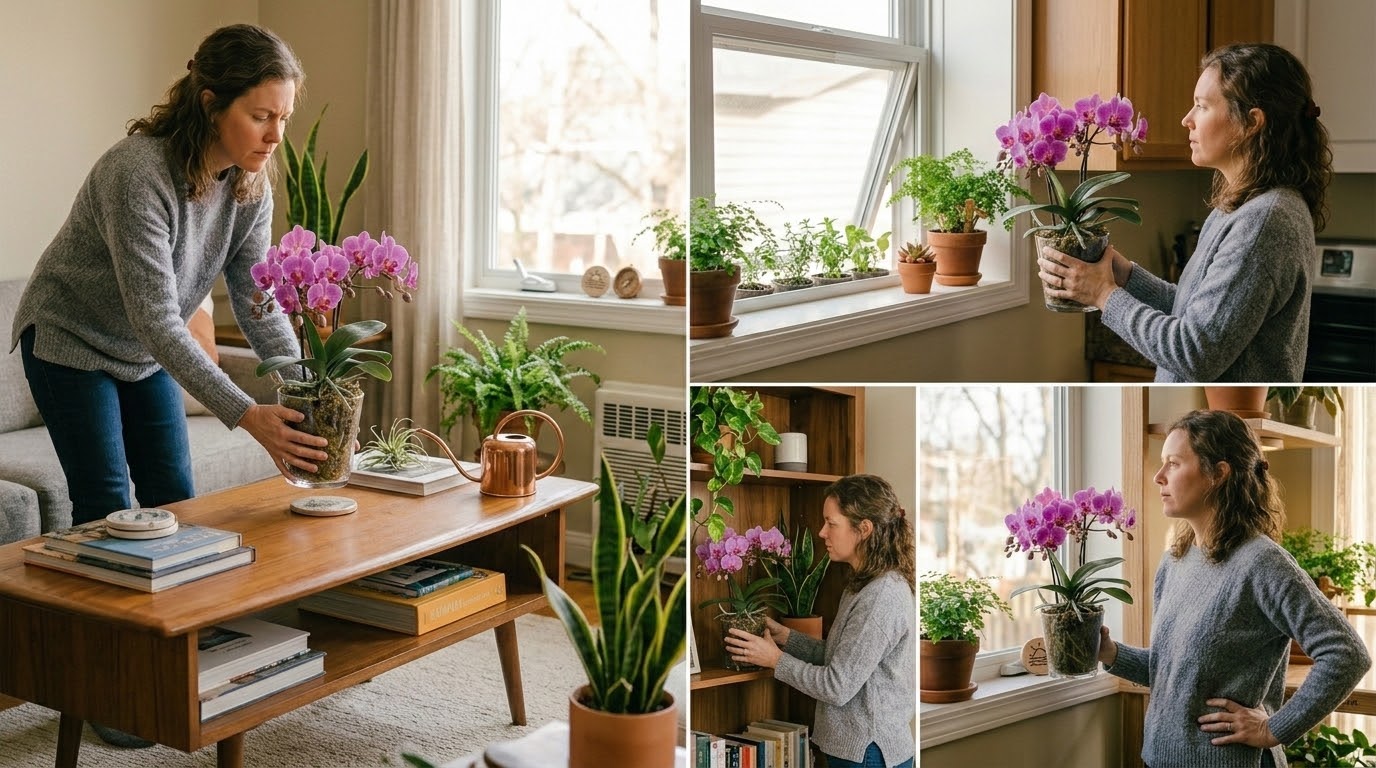
Você acabou de ganhar uma orquídea maravilhosa. Ela está ali, com as flores perfeitamente abertas, exalando vida e elegância. Você dá uma volta pela sala, olha para a mesa de centro, para a estante, para a janela da cozinha… e a dúvida bate forte: “Onde, afinal, eu devo colocar esse vaso para que a planta não morra?”.
Se você já perdeu uma orquídea no passado e acha que não tem “dedo verde”, saiba de um segredo reconfortante: na maioria das vezes, o problema não é a forma como você rega, mas sim onde você colocou a planta.
Achar o cantinho perfeito na sua casa é responsável por 50% do sucesso no cultivo. As orquídeas são plantas de hábitos específicos, mas, uma vez que você entende o que elas buscam, encontrar o local ideal se torna muito fácil. Neste guia completo e prático, vamos descobrir exatamente onde colocar sua orquídea para que ela prospere e volte a florir ano após ano.
A luz difusa que passa por uma cortina fina é o cenário dos sonhos para a grande maioria das orquídeas cultivadas em casa.
1. A Regra de Ouro: Luz Indireta Abundante
O erro número um ao posicionar uma orquídea é tratá-la como um objeto de decoração qualquer, colocando-a no centro de uma mesa de jantar escura ou em uma prateleira longe das janelas.
Na natureza, as orquídeas epífitas (como as famosas Phalaenopsis) vivem penduradas nos galhos das árvores. Isso significa que elas recebem muita luz do sol, mas essa luz é “quebrada” pelas folhas das árvores mais altas.
O local ideal dentro da sua casa deve imitar esse ambiente:
- Fuja do sol direto: O sol do meio-dia ou da tarde, batendo direto nas folhas, vai causar queimaduras irreversíveis (manchas pretas ou brancas e ressecadas).
- Fuja da escuridão: Um canto escuro pode manter a orquídea viva por um tempo, mas ela nunca terá energia suficiente para produzir uma nova haste floral.
- O Ponto Ideal: Perto de uma janela bem iluminada, onde você conseguiria ler um livro confortavelmente sem acender a luz. Se a janela recebe sol forte, basta usar uma cortina fina ou translúcida para filtrar os raios.
Como a planta te avisa se a luz está certa?
Olhe para a cor das folhas!
- Verde-maçã (claro e vivo): Iluminação perfeita!
- Verde muito escuro: O local está escuro demais.
- Folhas amareladas ou avermelhadas: Ela está recebendo sol demais e começando a se “queimar”.
2. Ventilação: O Fôlego da Planta
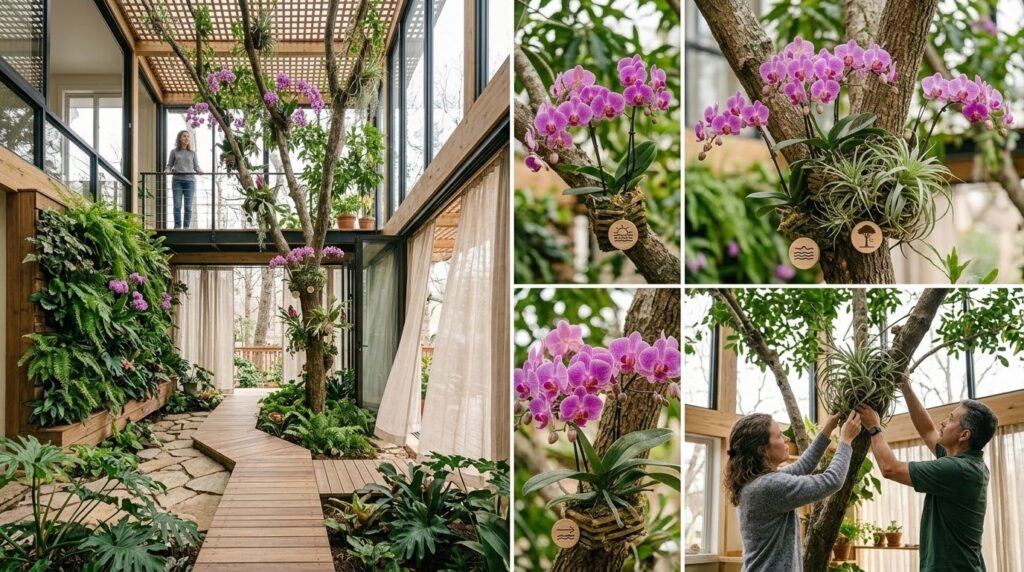
Lembra que elas vivem nas alturas das árvores? As orquídeas amam ar fresco e circulação. Um ambiente fechado e abafado é o convite perfeito para o surgimento de fungos e doenças que apodrecem as folhas e as raízes.
O local escolhido precisa ter uma boa circulação de ar natural, mas é preciso ter muito cuidado com dois inimigos silenciosos dentro de casa:
- Correntes de vento muito fortes: Janelas onde bate aquele vento gelado e constante podem desidratar a planta e fazer os botões florais caírem antes mesmo de abrirem.
- Ar-condicionado: É o grande vilão moderno. O ar-condicionado retira a umidade do ar (e as orquídeas amam umidade). Se o vento gelado do aparelho bater diretamente na sua planta, ela vai secar e murchar rapidamente.
Legenda: Um ambiente com luz natural filtrada e boa circulação de ar evita a proliferação de fungos e doenças nas folhas.
3. Avaliando os Cômodos da Casa
Cada casa é única, mas aqui vai um mapa prático dos melhores e piores lugares para a sua nova planta:
A Sala de Estar ou Quarto (Geralmente as melhores opções)
Se houver uma janela voltada para o Sol da Manhã (sol suave até umas 9h), esse é o paraíso das orquídeas. O solzinho fraco da manhã é excelente para estimular a floração sem queimar as folhas. Uma mesinha lateral perto da janela ou o próprio parapeito (desde que protegido nos horários mais quentes) são excelentes escolhas.
A Cozinha (Cuidado com as frutas)
A cozinha pode ser um ótimo lugar, pois costuma ser bem iluminada. No entanto, há um detalhe curioso: nunca coloque sua orquídea perto da fruteira. Frutas maduras (como bananas e maçãs) liberam um gás chamado etileno, que acelera o envelhecimento das flores da orquídea, fazendo com que caiam muito mais rápido. Além disso, mantenha a planta longe do calor do fogão ou do forno.
O Banheiro (Depende muito)
Muitas pessoas acham que o banheiro é ideal pela umidade do chuveiro. Pode até ser, mas apenas se o seu banheiro for extremamente bem iluminado e tiver uma janela grande sempre aberta. Um banheiro escuro e abafado vai apodrecer sua orquídea em questão de dias devido ao excesso de umidade retida.
4. A Regra de Ouro da Estabilidade: Deixe a Planta em Paz
Um hábito muito comum de quem está começando é ficar mudando a orquídea de lugar como se fosse um enfeite móvel. De manhã coloca na varanda para pegar sol, de tarde traz para a mesa de jantar, à noite leva para o quarto.
As orquídeas detestam mudanças constantes de ambiente.
As plantas se adaptam milimetricamente à luz e à temperatura de um local específico. Quando você a move toda hora, ela gasta muita energia tentando se readaptar e acaba estagnando ou perdendo as flores.
A Dica de Ouro: Encontrou um local com luz indireta, que receba o solzinho da manhã ou filtrado por cortina e com boa circulação de ar? Deixe o vaso lá e não o mova mais de ambiente.
Conclusão: Observação é a Chave
Posicionar a orquídea no lugar certo dentro de casa é o passo mais importante da sua jornada como cultivador(a). Não se trata de sorte, mas de observar como a luz se comporta na sua casa ao longo do dia.
Faça o teste: posicione sua planta naquele cantinho claro, protegido do sol direto e longe das correntes frias do ar-condicionado. Em pouco tempo, você notará as raízes ficando mais fortes, as folhas brilhantes e, quando você menos esperar, a recompensa virá em forma de uma nova e deslumbrante haste floral.
Veja também: Como Saber se a Orquídea Precisa de Água: A Arte de Dar Atenção Sem Sufocar
Deixe um comentário