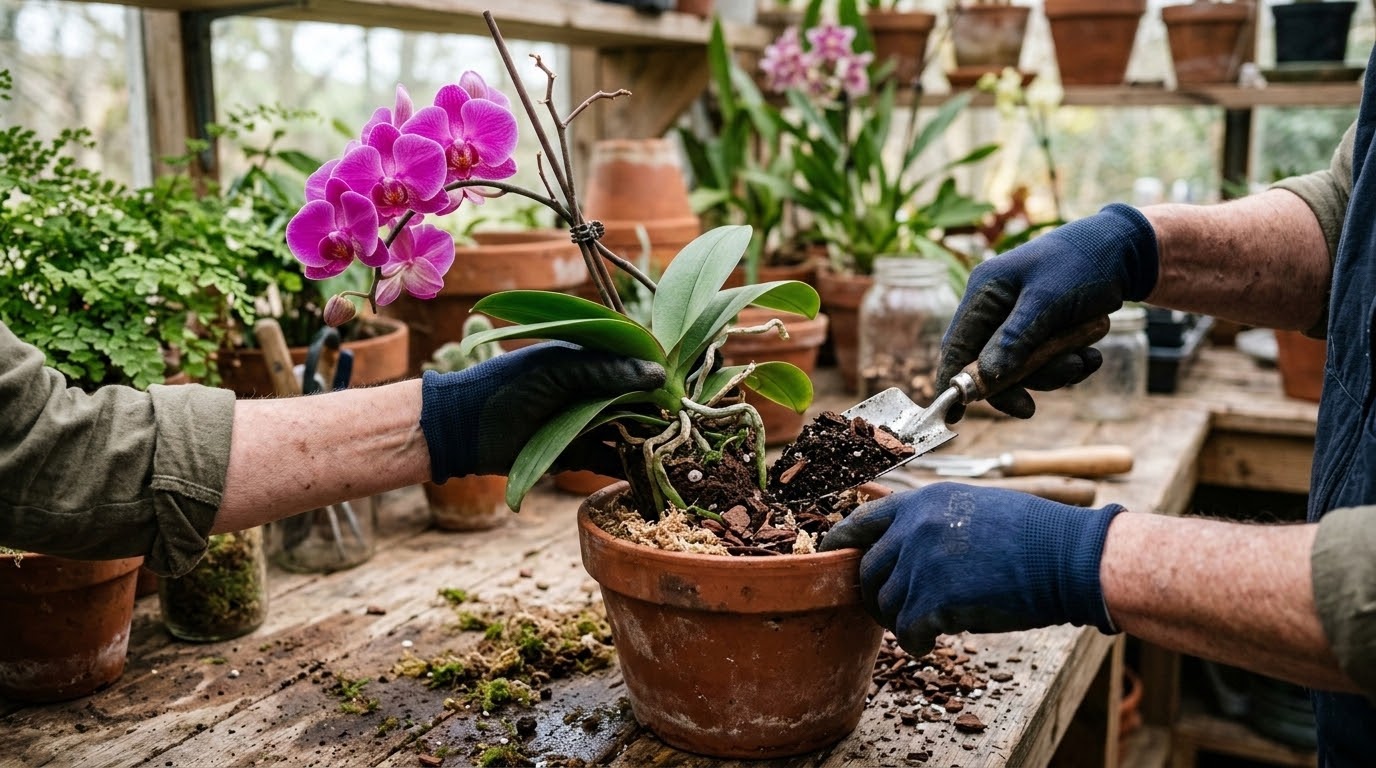
A orquidofilia é uma das vertentes mais gratificantes da jardinagem, unindo a paciência da botânica à beleza artística das flores. No entanto, para muitos entusiastas, o ato de replantar uma orquídea é um dos momentos de maior tensão. O medo de ferir as raízes sensíveis ou interromper um ciclo de floração é comum, mas o replantio é, na verdade, um procedimento vital para a longevidade da planta. Este guia detalha cada etapa do processo de como replantar uma orquídea, para garantir que sua orquídea transite para um novo lar com o mínimo de estresse e o máximo de vigor.
1. A Natureza das Raízes: Entendendo o Epifitismo
Para realizar um replantio de sucesso, o primeiro passo é entender a biologia fundamental da orquídea. A maioria das espécies populares, como Phalaenopsis, Cattleya e Dendrobium, são epífitas. Na natureza, elas não crescem na terra, mas sim sobre troncos de árvores, onde suas raízes ficam expostas a ciclos rápidos de chuva e secagem.
O Papel do Velame
As raízes das orquídeas são envoltas por uma estrutura esponjosa chamada velame. Esta camada de células mortas tem a função crítica de absorver umidade e nutrientes da atmosfera de forma quase instantânea. Contudo, o velame precisa de oxigênio constante. Quando as raízes ficam submersas em água ou presas em um substrato degradado e compacto, o oxigênio é expelido, criando um ambiente anaeróbico que atrai patógenos.
2. Diagnóstico: Quando é a Hora Certa de Replantar?
Replantar sem necessidade pode causar estresse desnecessário. Existem sinais específicos que indicam que a planta precisa de um novo ambiente:
- Substrato Decomposto: Se o substrato parecer terra, estiver com cheiro de mofo ou retiver umidade por tempo excessivo, ele perdeu sua função de aeração.
- Falta de Espaço: Quando a planta “foge” do vaso, com novos brotos ou raízes saindo pelas bordas de forma descontrolada.
- Problemas de Saúde: Presença de raízes podres (moles e escuras) ou folhas murchas mesmo com regas constantes.
- Ciclo de Crescimento: O momento ideal é logo após a floração, quando a planta inicia um novo ciclo e emite novas raízes.
O Alerta das Orquídeas Recém-Compradas
Muitas pessoas desejam replantar a orquídea assim que a compram. No entanto, se a planta estiver florida, o replantio é traumático e pode causar a queda prematura das flores. O ideal é aguardar o término da floração, a menos que haja um caso severo de podridão radicular.
3. Preparação do Material e Assepsia
A segurança biológica é o mandamento número um do orquidófilo. Ferramentas contaminadas podem espalhar vírus e fungos entre as plantas.
Ferramentas e Esterilização
- Tesouras de Poda: Devem ser afiadas para cortes limpos.
- Esterilização: Use fogo (maçarico ou chama de fogão) para esterilizar as lâminas entre o manuseio de cada planta.
- Agente Cicatrizante: A canela em pó é a favorita por suas propriedades fungicidas e capacidade de selar feridas abertas.
Escolha do Vaso Ideal
O vaso deve ser proporcional ao tamanho das raízes remanescentes, não ao tamanho das folhas.
| Tipo de Vaso | Características | Ideal para… |
|---|---|---|
| Barro (Cerâmica) | Poroso, permite que as raízes “respirem” e o excesso de água evapore. | Regiões úmidas e espécies como Cattleya. |
| Plástico Transparente | Retém umidade por mais tempo; permite monitorar as raízes. | Phalaenopsis, cujas raízes fazem fotossíntese. |
| Cestos de Madeira | Máxima circulação de ar; imita o habitat natural. | Espécies como Vanda e Cymbidium. |
4. A Engenharia do Substrato
Como as orquídeas epífitas detestam terra, o substrato deve ser uma mistura aerada que ofereça suporte e drenagem.
- Casca de Pinus: Fornece estrutura e excelente aeração.
- Carvão Vegetal: Absorve impurezas e auxilia na drenagem impecável.
- Musgo Esfagno: Atua como esponja, mantendo a umidade em climas secos (deve ser usado com cautela).
- Pedra Brita: Excelente para o fundo do vaso para garantir que o dreno nunca entupa.
5. Passo a Passo do Replantio “Cirúrgico”
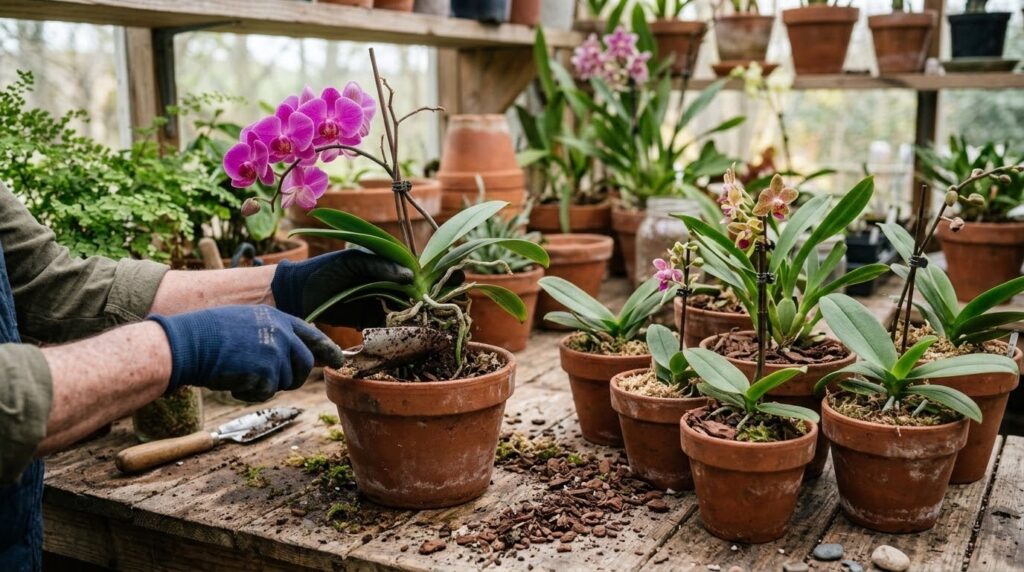
Siga este protocolo rigoroso para garantir que as raízes não sofram danos permanentes.
Passo 1: Hidratação Prévia
Antes de começar, regue bem a planta ou deixe o vaso de molho por alguns minutos. Raízes hidratadas são muito mais flexíveis e menos propensas a quebrar do que raízes secas e quebradiças.
Passo 2: Remoção Delicada
Retire a planta do vaso antigo. Se for plástico, aperte as laterais para soltar as raízes coladas. Se estiverem presas em vasos de barro, use uma faca esterilizada para soltá-las com extrema cautela.
Passo 3: Limpeza Completa
Remova todo o substrato antigo, pois ele provavelmente está ácido e carregado de patógenos. Lave as raízes em água corrente para visualizar claramente a saúde do sistema radicular.
- Raízes Saudáveis: São firmes ao toque, ficando verdes ou brancas quando molhadas.
- Raízes Mortas: Estão secas, ocas ou escuras e moles (podres). Corte-as com a tesoura esterilizada.
Passo 4: Posicionamento Estratégico
A forma como você posiciona a orquídea no vaso define o seu crescimento futuro.
- Orquídeas Simpodiais (ex: Cattleya): Crescem horizontalmente. Encoste a parte mais velha da planta na borda do vaso, deixando espaço na frente para os novos brotos crescerem em direção ao centro.
- Orquídeas Monopodiais (ex: Phalaenopsis): Centralize a planta no vaso.
Atenção Crítica: Nunca enterre o rizoma ou a base das folhas (coroa). O substrato deve cobrir apenas as raízes. Enterrar a coroa causará o apodrecimento da planta em poucas semanas.
Passo 5: Fixação e Estabilidade
Adicione o substrato aos poucos, firmando-o com os dedos. A planta deve ficar imóvel. Uma orquídea que balança não consegue enraizar, pois o movimento quebra as pontas novas e sensíveis das raízes em crescimento. Se necessário, use tutores de bambu ou arame para dar estabilidade inicial.
6. Cuidados Pós-Operatórios e Recuperação
Uma orquídea replantada está em estado de choque e requer atenção especial nos primeiros meses.
- Luminosidade: Mantenha-a em local com luz brilhante, mas sem sol direto intenso, para evitar a perda de água por transpiração excessiva.
- Rega Moderada: Nos primeiros dias, evite encharcar o substrato. Prefira borrifar água para manter a umidade ambiental elevada.
- Suspensão de Adubos: Evite fertilizantes químicos fortes até observar novos sinais de crescimento (novas pontas verdes nas raízes ou folhas novas).
- Estabilidade Total: Não mude a planta de lugar constantemente. Ela precisa de paz para se aclimatar ao novo ambiente.
7. Curiosidades e Fatos Fascinantes
As orquídeas são cercadas de histórias que explicam sua resiliência e popularidade:
- Mimetismo: Algumas orquídeas imitam a forma e o cheiro de insetos para atrair polinizadores sem gastar energia produzindo néctar.
- Damas Dançantes: O gênero Oncidium é conhecido como “Dama Dançante” porque suas flores se assemelham a bailarinas em movimento.
- Homenagem Histórica: O gênero Cattleya recebeu esse nome em homenagem a William Cattley, o primeiro a conseguir florescer essas plantas na Europa no século XIX.
- A Baunilha: Poucos sabem, mas a essência de baunilha original é extraída das sementes de uma orquídea trepadeira, a Vanilla planifolia.
- Longevidade: Se bem cuidadas e replantadas corretamente, algumas orquídeas podem viver por mais de 100 anos.
8. Conclusão
Dominar a arte de replantar orquídeas sem danificar as raízes é o divisor de águas entre um cultivador iniciante e um verdadeiro mestre. Embora o processo exija rigor e paciência, o aprendizado sobre a fisiologia da planta é inestimável. Ao respeitar as necessidades de ar, drenagem e estabilidade, você transforma um procedimento potencialmente perigoso em um oásis de renovação para sua planta.
Lembre-se sempre: na dúvida, menos água e mais observação são os segredos para um orquidário saudável. O replantio não é apenas uma mudança de casa; é uma declaração de cuidado e respeito pela vida vegetal.
Deixe um comentário