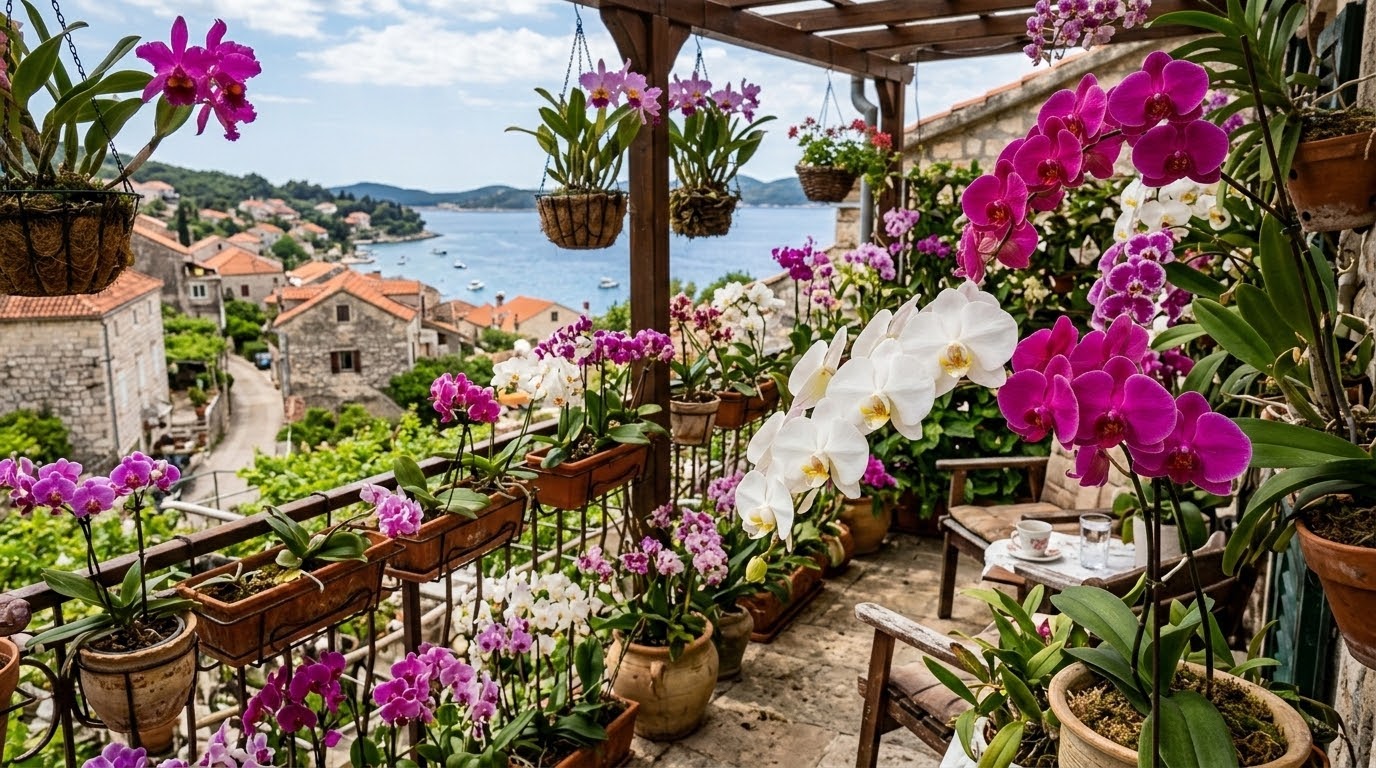
As varandas tornaram-se o refúgio botânico preferido dos entusiastas de orquídeas que vivem em ambientes urbanos. No entanto, transformar um espaço de concreto em um orquidário próspero exige mais do que apenas paixão; requer uma compreensão profunda da fisiologia dessas plantas e de como elas interagem com as condições específicas de um ambiente semiaberto. O cultivo em varandas apresenta desafios únicos, como a intensidade do vento, a limitação de luz solar direta e a gestão da umidade em áreas muitas vezes pavimentadas.
Neste guia vamos explorar os pilares fundamentais para o sucesso de como cultivar orquídeas em varanda, desde a seleção das espécies até o manejo avançado de nutrientes e proteção ambiental.
1. Anatomia e Escolha de Espécies para Varandas
Para cultivar orquídeas com sucesso, é preciso entender que elas não são plantas comuns. A maioria das orquídeas cultivadas são epífitas, o que significa que, na natureza, elas vivem sobre árvores, usando seus troncos como suporte e absorvendo nutrientes e água do ar e da chuva.
Morfologia de Crescimento
Existem dois tipos principais de crescimento que influenciam como a planta deve ser disposta na varanda:
- Crescimento Monopodial: A planta cresce verticalmente a partir de um único ponto central, produzindo folhas alternadas e opostas. O exemplo mais clássico é a orquídea Vanda. Elas não possuem pseudobulbos para armazenar água, o que as torna extremamente dependentes de uma rotina de rega rigorosa e alta umidade.
- Crescimento Simpodial: Possuem um rizoma que cresce horizontalmente, do qual brotam novos pseudobulbos. Exemplos incluem Cattleya, Dendrobium e Oncidium. Esses pseudobulbos funcionam como tanques de armazenamento de água, tornando essas plantas mais resilientes a curtos períodos de seca.
Espécies Recomendadas para Varandas
Nem toda orquídea se adapta ao microclima de uma varanda. A escolha deve ser baseada na resistência e na facilidade de aclimatação:
- Cattleya: Robustas e adaptáveis, ideais para locais com boa luminosidade.
- Vanda: Espetaculares para quem pode oferecer sol matinal intenso e tem tempo para regas frequentes, já que vivem com “raízes nuas”.
- Dendrobium (Olho de Boneca): Extremamente resilientes, suportam variações bruscas de temperatura e luz.
- Oncidium (Chuva de Ouro): Adaptam-se bem a fendas e cestos, colonizando rapidamente o suporte com suas raízes finas.
2. O Domínio da Luz: O Combustível da Floração
A luz é, sem dúvida, o fator mais crítico para a floração das orquídeas. Em uma varanda, a luz geralmente é lateral, o que pode fazer com que a planta cresça inclinada em busca da fonte luminosa.
Necessidades por Tipo de Folha
A estrutura foliar é o melhor indicador da necessidade de luz de uma orquídea:
- Folhas Cilíndricas (Teretes): Como algumas espécies de Vanda, são altamente resistentes e toleram sol pleno.
- Folhas em Forma de Fita (Strap-leaved): Preferem luz brilhante, mas indireta. Em varandas voltadas para o norte ou oeste, é crucial protegê-las do sol forte entre as 11h e 15h para evitar queimaduras.
Diagnóstico pela Cor das Folhas
A observação constante permite ajustar a posição da planta:
- Verde Alface Vibrante: O estado ideal. Indica que a planta está recebendo a quantidade correta de fótons para a fotossíntese eficiente.
- Verde Escuro Intenso: Sinal de pouca luz. A planta pode crescer, mas dificilmente produzirá flores.
- Amarelado ou com Manchas Marrons: Excesso de sol, resultando em queimaduras nos tecidos foliares.
3. Vento e Ventilação: O Herói Silencioso
Diferente de plantas de interior que preferem ar estagnado, as orquídeas precisam de brisa constante. No entanto, em varandas de andares altos, o vento pode ser excessivo e desidratante.
Benefícios da Ventilação
- Prevenção de Doenças: O ar em movimento seca rapidamente a água acumulada nas axilas das folhas, prevenindo a podridão negra e ataques fúngicos.
- Regulação Térmica: Ajuda a resfriar a planta em dias de calor intenso.
Proteção Contra Ventos Excessivos
Se a varanda for muito exposta, o vento pode “sugar” a umidade da planta mais rápido do que ela consegue absorver.
- Telas de Sombrite: Podem ser usadas para quebrar a força do vento sem impedir a passagem do ar.
- Barreiras Naturais: Colocar plantas maiores e mais resistentes (como palmeiras de vaso) na borda da varanda para criar um microclima protegido para as orquídeas.
- Proteção no Inverno: Ventos gelados são fatais. Se a temperatura cair abaixo de 10°C, é recomendável recolher as plantas para áreas protegidas durante a noite.
4. Rega e Umidade: A Ciência do Velame
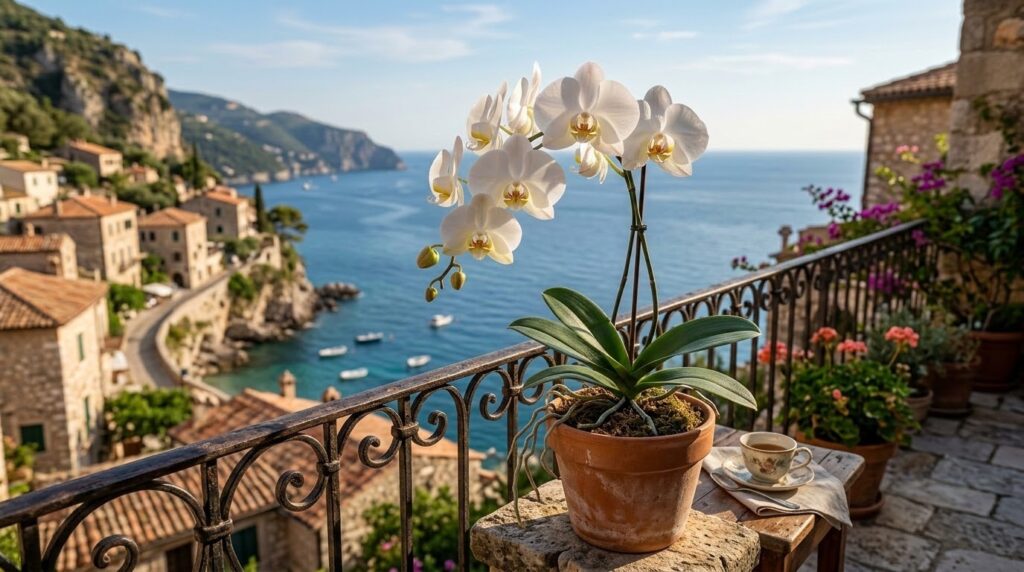
A rega de uma orquídea na varanda não segue um calendário fixo, mas sim as condições climáticas do dia.
A Função do Velame
As raízes das orquídeas (especialmente as Vandas e Cattleyas) são cobertas por uma camada esponjosa chamada velame. Esta estrutura absorve umidade e nutrientes instantaneamente.
- Raízes Prateadas/Esbranquiçadas: A planta está seca e precisa de água.
- Raízes Verdes: A planta está hidratada e realizando fotossíntese radicular.
Métodos de Rega na Varanda
- Aspersão: Ideal para dias quentes, molhando folhas e raízes.
- Imersão: Para plantas em cestos ou com raízes nuas, mergulhar as raízes em um balde com água por 15 a 20 minutos garante a saturação total do velame.
- Frequência: No verão, pode ser necessário regar até duas vezes ao dia. No inverno ou dias úmidos, reduza a frequência, observando sempre a cor das raízes.
| Parâmetro de Cultivo | Nível Ideal para Varandas | Observação Técnica |
|---|---|---|
| Luminosidade | 70% a 80% | Preferencialmente sol da manhã ou luz filtrada |
| Umidade do Ar | 60% a 80% | Pode ser aumentada com bandejas de umidade |
| Temperatura Mínima | 15°C | Abaixo disso, muitas espécies entram em dormência |
| Ventilação | Moderada | Essencial para evitar apodrecimento do miolo |
5. Nutrição e Fortalecimento
Como as orquídeas em varandas são frequentemente cultivadas em substratos inertes (casca de pinus, carvão) ou raízes nuas, a adubação é essencial.
O Método “Weekly, Weakly”
A regra de ouro é: adubar semanalmente, mas com uma dose muito diluída. Isso evita o acúmulo de sais minerais que podem queimar as pontas das raízes.
- Crescimento: Use fórmulas equilibradas como NPK 20-20-20.
- Floração: Fórmulas com mais fósforo (ex: NPK 10-30-20) estimulam o surgimento de hastes florais.
- Dica Crucial: Sempre molhe a planta com água pura antes de aplicar o adubo. Isso hidrata o velame e permite que a absorção dos nutrientes seja mais suave e segura.
6. Desafios: Pragas e Doenças Comuns
O diagnóstico precoce é fundamental para a sobrevivência da orquídea.
Insetos Sugadores
- Cochonilhas e Pulgões: Comuns em varandas com pouca circulação de ar. Podem ser combatidos com óleo de neem ou sabão potássico.
- Ácaros: Surgem em ambientes muito secos e deixam as folhas com aspecto prateado.
Doenças Bacterianas e Fúngicas
- Podridão Negra: Resultante de água parada nas folhas aliada a calor excessivo. É frequentemente fatal se atingir o ápice do caule monopodial.
- Manchas Foliares: Causadas por fungos (Cercospora). O tratamento envolve melhorar a ventilação e o uso de fungicidas específicos.
7. Curiosidades e Fatos Fascinantes
As orquídeas guardam segredos que encantam colecionadores há séculos:
- Cores Raras: A Vanda coerulea é um dos poucos exemplos na natureza de orquídeas que produzem um azul verdadeiro, uma cor extremamente rara no reino vegetal.
- Longevidade: Uma floração bem cuidada pode durar de 4 a 8 semanas, e algumas espécies podem florescer até três vezes por ano sob condições ideais.
- Cestos Suspensos: O cultivo em cestos de madeira (slatted baskets) não é apenas estético; ele permite que as raízes da Vanda cresçam em 360 graus, exatamente como fariam na natureza.
8. Passo a Passo para Montar seu Orquidário de Varanda
Para garantir o sucesso desde o primeiro dia, siga este roteiro:
- Mapeamento de Luz: Observe onde o sol bate em sua varanda em diferentes horários. Escolha o local que recebe o sol da manhã (mais suave).
- Instalação de Ganchos: Utilize ganchos resistentes e pendure as plantas de modo que fiquem expostas à brisa, mas protegidas de correntes de ar muito fortes.
- Preparação do Suporte: Se for usar cestos, prefira os de madeira que retêm um mínimo de umidade sem sufocar as raízes.
- Hidratação Inicial: Ao adquirir uma planta nova, hidrate suas raízes por imersão para ajudá-la na transição para o novo ambiente.
- Cicatrizantes Naturais: Ao realizar podas de raízes secas, utilize canela em pó nos cortes para evitar a entrada de fungos.
9. Conclusão
Cultivar orquídeas em varandas é uma jornada de observação e sintonia fina com a natureza. Embora essas plantas exijam uma atenção diária mais refinada do que as plantas de vaso comuns, a recompensa de transformar um espaço urbano em um jardim suspenso repleto de cores, formas exóticas e perfumes é inigualável.
Ao respeitar as necessidades de luz, garantir que o ar flua livremente entre as folhas e manter uma rotina de rega que respeite a fisiologia do velame, você não terá apenas plantas, mas verdadeiras joias botânicas que prosperarão ano após ano. A paciência é a melhor ferramenta do orquidófilo; cada nova raiz verde e brilhante é a prova de que sua varanda se tornou um lar perfeito para as rainhas da natureza.
Deixe um comentário