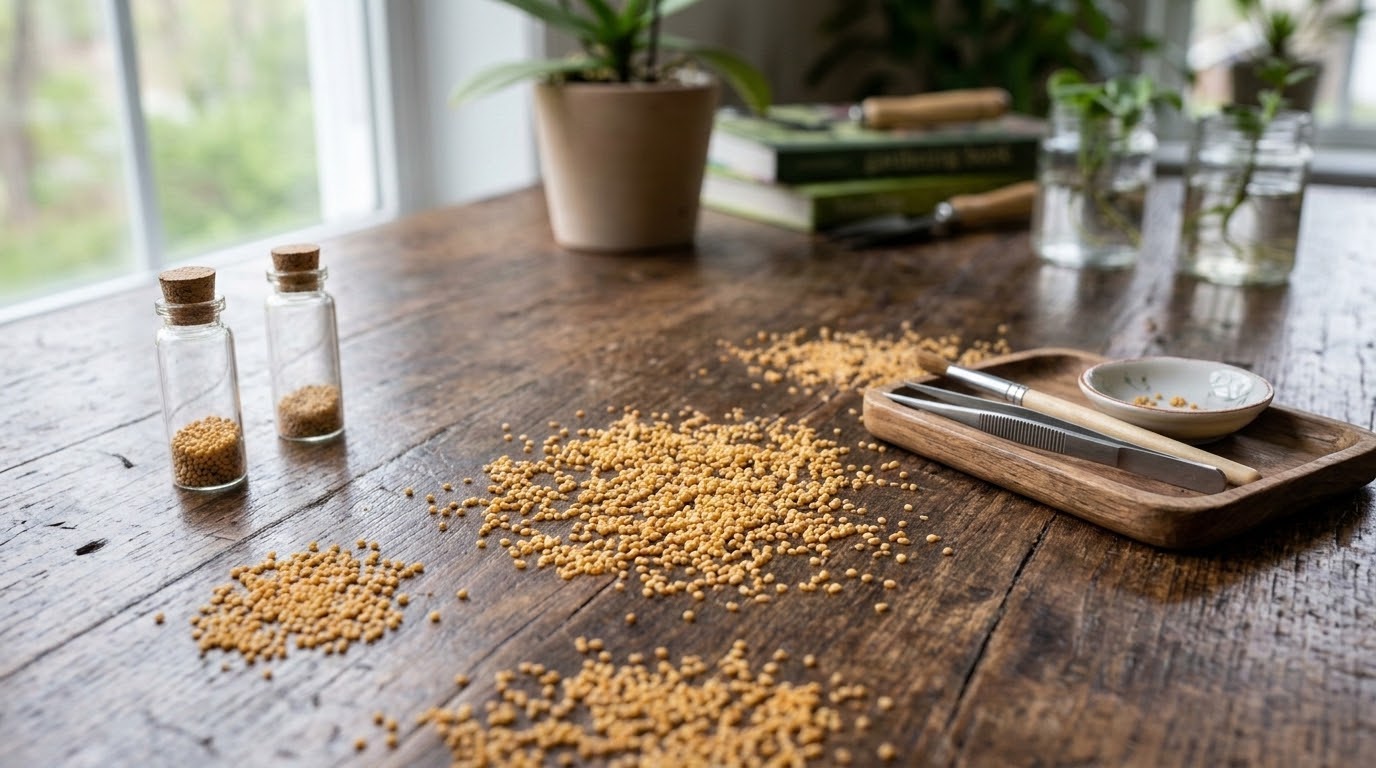
A orquidofilia é uma jornada que une a paciência da botânica à beleza artística das flores. No entanto, para muitos entusiastas, o ápice dessa jornada não é apenas ver uma planta florescer, mas sim o processo milagroso de criar vida a partir de sementes que são, literalmente, tão finas quanto o pó. Diferente da maioria das plantas ornamentais, semear orquídeas é um desafio técnico que exige precisão, assepsia e um entendimento profundo da biologia vegetal.
Este guia detalha sobre como plantar sementes de orquídeas, desde a compreensão da anatomia da semente até os cuidados pós-germinação, garantindo que você compreenda as nuances que transformam um grão microscópico em uma planta vigorosa.
1. A Biologia Única da Semente de Orquídea
Para dominar a semeadura, é preciso primeiro entender por que as orquídeas são tão diferentes de um feijão ou de uma semente de girassol.
O Conceito de “Semente de Pó”
As sementes de orquídeas são as menores do reino vegetal. Uma única cápsula pode conter de 1.300 a mais de 4.000.000 de sementes, dependendo da espécie. Elas são tão leves que são dispersas pelo vento como poeira. No entanto, essa miniaturização tem um custo biológico: elas não possuem endosperma.
O endosperma é o “estoque de comida” que a maioria das sementes carrega para alimentar o embrião até que ele possa realizar fotossíntese. Sem essa reserva, a semente de orquídea é incapaz de germinar sozinha na natureza. Ela precisa de um parceiro externo.
A Simbiose Micorrízica
Na natureza, as orquídeas dependem de fungos específicos chamados micorrizas que vivem no ambiente. O fungo penetra na semente e fornece os açúcares e nutrientes necessários para o desenvolvimento do protocormo (a fase inicial da germinação). Sem esse fungo, a semente morre em poucos dias.
No cultivo doméstico e laboratorial, contornamos essa dependência através da germinação assimbiótica, onde fornecemos todos os nutrientes artificialmente em um meio de cultura esterilizado.
2. Métodos de Semeadura: Do Natural ao Laboratorial
Existem dois caminhos principais para quem deseja semear orquídeas. O sucesso de cada um depende diretamente do controle ambiental.
O Método “Scatter” (Dispersão Natural)
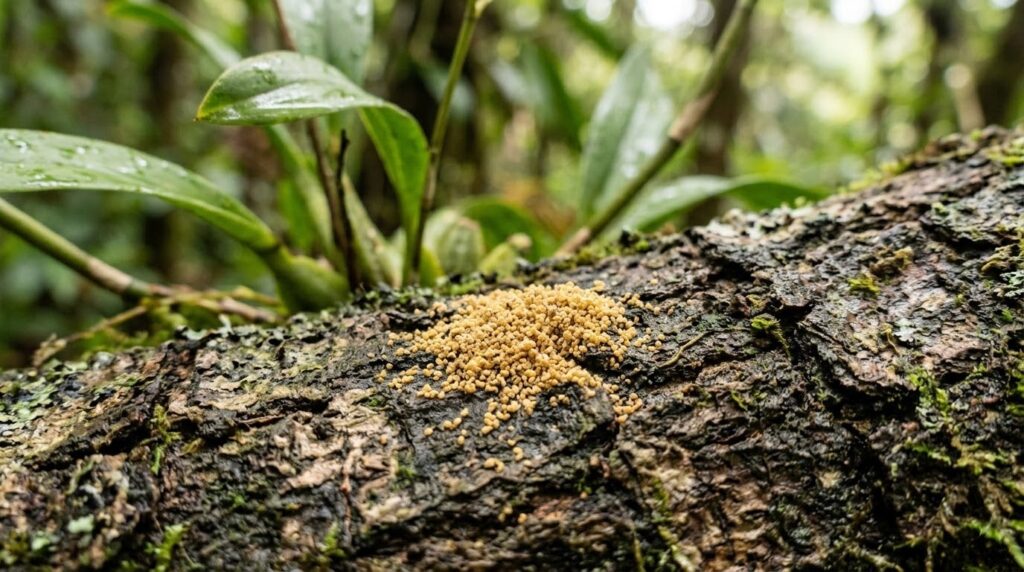
Este é o método mais rudimentar e com as menores chances de sucesso. Consiste em espalhar as sementes na base de uma orquídea adulta ou diretamente em troncos de árvores onde já existam fungos micorrízicos estabelecidos.
- Vantagem: Baixo custo e mimetismo do processo natural.
- Desvantagem: Taxa de germinação baixíssima (menos de 1%) e exposição total a pragas e patógenos.
O Método In Vitro (Assepsia Total)
Este é o padrão ouro da orquidofilia moderna. As sementes são colocadas em frascos de vidro contendo um meio de cultura rico em açúcares, minerais e vitaminas.
- Vantagem: Taxas de germinação próximas a 100%.
- Desvantagem: Exige equipamento especializado, assepsia rigorosa e controle de luz e temperatura.
3. Preparação do Meio de Cultura
O “solo” das orquídeas in vitro não é terra, mas sim uma gelatina nutritiva.
Componentes Essenciais
- Agar-Agar: Agente solidificante que dá a textura de gelatina ao meio.
- Sais NPK e Micronutrientes: Fornecem o Nitrogênio, Fósforo e Potássio essenciais.
- Sacarose (Açúcar): Substitui a energia que o fungo forneceria na natureza.
- Carvão Ativado: Ajuda a absorver toxinas liberadas pelas sementes e mantém a assepsia.
- Água Destilada: Para garantir que não existam contaminantes minerais ou cloro.
O pH do meio deve ser ajustado para um nível levemente ácido, geralmente entre 5.2 e 5.8, para que as raízes microscópicas possam absorver os nutrientes sem sofrer queimaduras químicas.
4. O Processo de Semeadura Passo a Passo
A semeadura deve ocorrer em um ambiente estéril. Qualquer esporo de fungo ou bactéria no ar que caia no frasco crescerá muito mais rápido que a orquídea, matando a cultura.
Esterilização da Cápsula
Se a cápsula ainda estiver fechada (verde), o processo é mais simples. A parte externa é lavada com álcool 70% e hipoclorito de sódio (água sanitária). A cápsula é aberta dentro de uma câmara de fluxo laminar ou “glove box” e as sementes são espalhadas diretamente no meio de cultura.
Semeadura de Sementes Secas
Se as sementes foram colhidas de uma cápsula que já abriu, elas devem ser esterilizadas individualmente.
- Coloque as sementes em uma seringa com um filtro fino.
- Aspire uma solução diluída de hipoclorito de sódio.
- Agite por 5 a 10 minutos.
- Enxágue várias vezes com água destilada estéril antes de aplicar no frasco.
5. Fatores Críticos para a Germinação
Uma vez semeado, o frasco torna-se um ecossistema fechado que precisa de monitoramento constante.
| Fator | Requisito Ideal | Impacto na Germinação |
|---|---|---|
| Luz | 12-14 horas de luz indireta | Estimula a produção de clorofila no protocormo. |
| Temperatura | 20°C a 28°C | Acelera o metabolismo sem “cozinhar” as células. |
| Assepsia | 100% livre de fungos | Evita a perda total da cultura por contaminação. |
| Umidade | Interna do frasco (100%) | Essencial para manter o velame em formação hidratado. |
6. A Jornada do Protocormo à Planta
A germinação de orquídeas não produz folhas imediatamente. O processo passa por fases distintas:
- Entumecimento: As sementes absorvem água e tornam-se pequenas esferas verdes chamadas protocormos.
- Diferenciação: Surge a primeira ponta de folha e, posteriormente, as primeiras raízes com velame.
- Replante (Replate): Quando o frasco fica lotado, as mudas são movidas para novos frascos com meio de cultura fresco para ganhar tamanho.
7. Aclimatização: O Desafio de Sair do Frasco
Este é o momento onde a maioria dos iniciantes falha. As plantas que viveram meses em 100% de umidade e nutrientes fáceis precisam enfrentar o mundo real.
O Processo de “Deflasking”
As mudas são retiradas do frasco e lavadas para remover todo o resquício de ágar (que atrairia fungos). Elas devem ser plantadas em um substrato que retenha umidade, mas ofereça oxigenação, como o musgo esfagno misturado com carvão vegetal fino.
Cuidados na Transição
- Umidade: Use uma estufa ou plástico para manter a umidade alta nos primeiros 15 dias.
- Rega: Utilize a técnica do “Weekly, Weakly” (semanalmente, fracamente) com adubação diluída para estimular as raízes.
- Luz: Evite o sol direto; as folhas jovens são extremamente sensíveis a queimaduras.
8. Curiosidades Fascinantes sobre Sementes de Orquídeas
- Longevidade Extrema: Se mantidas em condições de frio e baixa umidade (bancos de sementes), sementes de algumas orquídeas podem permanecer viáveis por décadas.
- Mimetismo Químico: Algumas sementes emitem sinais químicos que enganam os fungos, fazendo-os acreditar que são uma fonte de alimento, quando na verdade a semente é quem irá consumir o fungo.
- Variabilidade Genética: Ao contrário dos keikis (clones), cada semente de uma cápsula é geneticamente única. Isso significa que, em um lote de sementes de uma mesma planta, você pode obter flores com cores e formatos variados.
9. Manutenção e Registro do Orquidário
O sucesso na semeadura depende da organização. Manter um registro de cada lote é fundamental para identificar quais cruzamentos e meios de cultura funcionam melhor.
| Item de Controle | Detalhes |
|---|---|
| Responsável | Person |
| Data da Semeadura | Date |
| Espécie/Cruzamento | (Ex: Cattleya walkeriana x self) |
| Meio de Cultura | (Ex: Knudson C ou Caseiro) |
| Local de Incubação | Place |
10. Conclusão
Semear orquídeas é um exercício de paciência e respeito à biologia dessas plantas magníficas. Embora o processo exija rigor técnico e um investimento inicial em assepsia, a recompensa de ver centenas de pequenas plantas surgindo de um “pó” microscópico é incomparável.
Ao dominar a arte da semeadura, você não apenas aumenta sua coleção, mas também contribui para a preservação de espécies que, em muitos casos, estão ameaçadas em seus habitats naturais. Lembre-se: o segredo não reside em uma fórmula mágica, mas na constância dos cuidados básicos, na observação atenta e na manutenção de um ambiente limpo e equilibrado.
Com dedicação, suas sementes se tornarão protagonistas de um espetáculo de cores e perfumes que durará por gerações.
Deixe um comentário