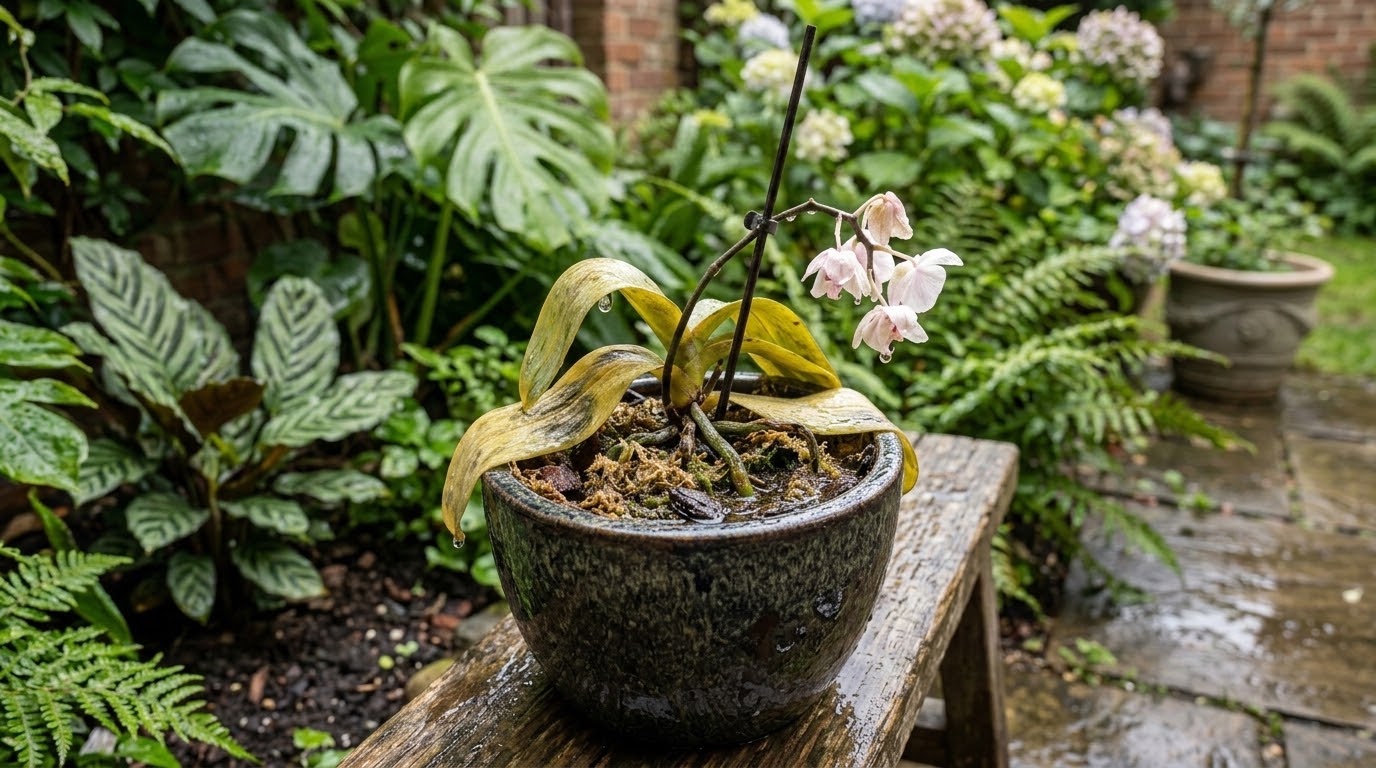
O cultivo de orquídeas é frequentemente descrito como uma arte que exige paciência, observação e um conhecimento técnico apurado sobre as necessidades específicas de cada espécie. Entre todos os desafios enfrentados por entusiastas, desde o iniciante até o colecionador experiente, um dos problemas mais recorrentes e letais é o excesso de rega. Diferente de muitas plantas domésticas comuns, as orquídeas possuem uma fisiologia única, adaptada para sobreviver em condições onde a drenagem e a ventilação são primordiais.
Este artigo explora profundamente o fenômeno do excesso de água em orquídeas, detalhando como ele afeta as estruturas vitais da planta, quais sinais o cultivador deve observar para um diagnóstico precoce e os passos exatos para uma recuperação bem-sucedida.
1. A Fisiologia da Orquídea e o Papel da Água
Para compreender por que o excesso de água é tão prejudicial, é essencial entender o funcionamento das raízes das orquídeas. A maioria das espécies cultivadas, como as Phalaenopsis e Cattleyas, são epífitas. Na natureza, elas crescem sobre árvores, com suas raízes expostas ao ar, recebendo umidade da chuva e da neblina, mas secando rapidamente logo em seguida.
O Velame: A Esponja Protetora
As raízes das orquídeas são revestidas por uma camada esbranquiçada e esponjosa conhecida como velame. Esta estrutura desempenha funções críticas:
- Absorção: Funciona como uma esponja que retém água e nutrientes rapidamente quando disponíveis.
- Proteção: Atua como um escudo fisiológico contra patógenos e dessecação.
- Troca Gasosa: As raízes das orquídeas respiram. Em um ambiente saturado de água, o oxigênio é expulso, levando à asfixia radicular e ao início do processo de decomposição.
2. Diagnóstico: Identificando os Sintomas do Excesso de Água
O diagnóstico precoce é o fator determinante entre a vida e a morte da planta. Os sintomas do excesso de água muitas vezes podem ser confundidos com a falta dela, o que leva o cultivador inexperiente a regar ainda mais, agravando o problema.
Sinais Visíveis nas Raízes
As raízes são as primeiras a sofrer. Uma orquídea saudável deve ter raízes firmes, verdes ou acinzentadas (quando secas) e com pontas de crescimento ativas.
- Coloração Escura e Amolecimento: Raízes podres apresentam-se escuras (marrom ou preto) e moles ao toque.
- Odor Desagradável: A decomposição bacteriana e fúngica resultante da umidade parada gera um cheiro característico de podridão.
Sinais nas Folhas
As folhas servem como um painel de controle da saúde da orquídea.
- Amarelecimento Progressivo: Pode indicar o início de uma podridão radicular severa, onde a planta não consegue mais processar nutrientes.
- Folhas Enrugadas (Paradoxo da Desidratação): Este é um sintoma clássico. Embora pareça falta de água, folhas murchas e enrugadas em substratos encharcados indicam que as raízes já apodreceram e, por isso, a planta não consegue “beber” a água disponível.
- Manchas Aquosas: Manchas escuras com bordas que parecem encharcadas geralmente são sinais de infecções bacterianas favorecidas pela umidade excessiva.
3. Riscos e Causas Comuns
A água parada não é apenas um problema físico, mas um gatilho biológico para o desastre.
| Causa Principal | Impacto Fisiológico na Planta |
|---|---|
| Água Parada no Miolo | O acúmulo nas axilas das folhas ou no “olho” da planta é o principal gatilho para a podridão da coroa. |
| Falta de Ventilação | Ambientes abafados impedem a evaporação do excesso de umidade, criando o clima ideal para fungos. |
| Substrato Degradado | Com o tempo, o substrato se decompõe e perde a porosidade, retendo água como uma esponja velha e sufocando as raízes. |
| Excesso de Nitrogênio | Adubação excessiva cria tecidos moles e suculentos, que são mais vulneráveis ao ataque de patógenos em ambientes úmidos. |
4. Protocolo de Recuperação Passo a Passo
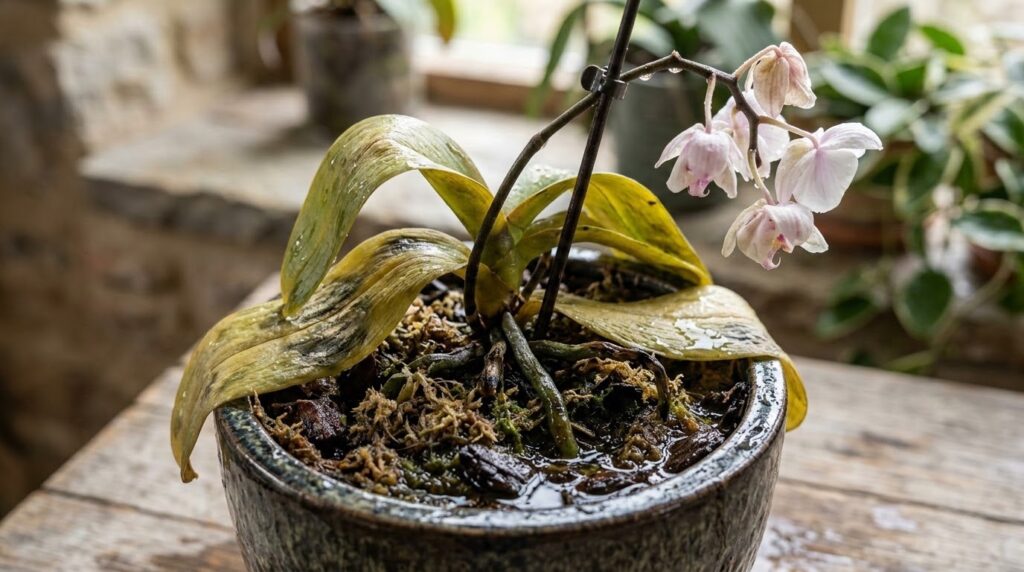
Se você identificou que sua orquídea está sofrendo com o excesso de água, é necessário agir rapidamente através de um processo de “cirurgia vegetal”.
Fase 1: Isolamento e Limpeza
O primeiro passo é remover a planta do ambiente compartilhado para evitar a propagação de doenças.
- Retirada do Vaso: Remova a orquídea com cuidado e descarte todo o substrato antigo. Ele provavelmente está saturado e contaminado.
- Lavagem Radicular: Lave as raízes em água corrente para remover resíduos e visualizar claramente o que está saudável e o que está morto.
Fase 2: A Intervenção Cirúrgica
Para salvar a planta, você deve remover as partes mortas para impedir que a podridão avance para o rizoma.
- Esterilização de Ferramentas: Utilize tesouras ou lâminas esterilizadas com fogo ou álcool 70%. Ferramentas sujas são vetores de transmissão de doenças.
- Corte Estratégico: Remova todas as raízes moles, ocas ou escuras. Se houver manchas bacterianas nas folhas, corte pelo menos 2 a 3 centímetros de tecido saudável abaixo da infecção.
- Cicatrização Natural: Aplique canela em pó nas áreas cortadas. A canela é um fungicida e bactericida natural potente que ajuda a selar as feridas.
Fase 3: Replantio e Estímulo
Após a “cirurgia”, a planta precisa de um ambiente que favoreça a regeneração radicular.
- Novo Substrato: Use uma mistura aerada de casca de pinus, carvão vegetal e, se necessário, uma pequena quantidade de musgo esfagno de alta qualidade.
- Vaso Proporcional: Não use vasos grandes demais. Vasos menores secam mais rápido e reduzem o risco de reincidência do excesso de umidade.
5. Cuidados Essenciais e Prevenção
Manter uma orquídea saudável é significativamente mais fácil do que recuperar uma doente. A prevenção baseia-se no tripé: Higiene, Ambiente e Manejo.
- Rega Consciente: O ideal é regar no início da manhã, permitindo que a planta seque ao longo do dia. Se cair água no miolo das folhas, seque manualmente com papel absorvente.
- Circulação de Ar: A ventilação é a melhor defesa contra a podridão. Garanta que o ar circule livremente entre os vasos.
- Quarentena: Ao trazer uma nova planta para casa, mantenha-a isolada por 15 a 30 dias para garantir que ela não carrega doenças latentes.
6. Curiosidades e Fatos Fascinantes
- Simbiose: Nem todos os microrganismos são vilões. Existem rizobactérias benéficas que vivem em harmonia com as raízes, auxiliando na absorção de nutrientes e fortalecendo a imunidade da planta.
- Resistência Específica: Algumas espécies, como a Vanda coerulea, possuem mecanismos para lidar com alta umidade, mas ainda dependem criticamente da circulação de ar constante em suas raízes aéreas.
- O Velame como Filtro: Além de absorver água, o velame atua como um filtro, protegendo a raiz interna (o cilindro central) de variações bruscas de temperatura e ataques externos.
Conclusão
A recuperação de uma orquídea afetada pelo excesso de água exige um olhar atento e uma ação decisiva. Embora o pânico seja comum ao ver uma planta definhando, o conhecimento técnico sobre a anatomia radicular e o uso de técnicas simples, como a esterilização de ferramentas e o uso de cicatrizantes naturais, pode reverter quadros severos. O segredo do sucesso na orquidofilia não reside em uma fórmula mágica de rega, mas na sintonia fina com o ambiente e no respeito ao ciclo natural de umidade e secagem dessas magníficas plantas.
Deixe um comentário