A orquidofilia é uma jornada que une a paciência da botânica à beleza artística das flores. Para o cultivador, entender a nutrição não é apenas uma questão de oferecer alimento às plantas, mas sim de criar um simulador de habitat que equilibre suporte, umidade e oxigenação. Dentro deste ecossistema doméstico, as raízes são o coração e a alma da planta: sem um sistema radicular vigoroso, a orquídea jamais alcançará seu potencial máximo de floração.
Neste artigo exploraremos profundamente como estimular o crescimento das raízes de forma natural e eficiente, transformando o velame em uma esponja capaz de suportar o estresse e produzir florações inesquecíveis.
1. A Biologia das Raízes: O Pilar da Sobrevivência
Diferente das plantas de jardim comuns, a maioria das orquídeas populares são epífitas, crescendo sobre troncos de árvores em florestas tropicais. Elas não utilizam o solo para nutrição, mas sim para fixação.
O Papel do Velame
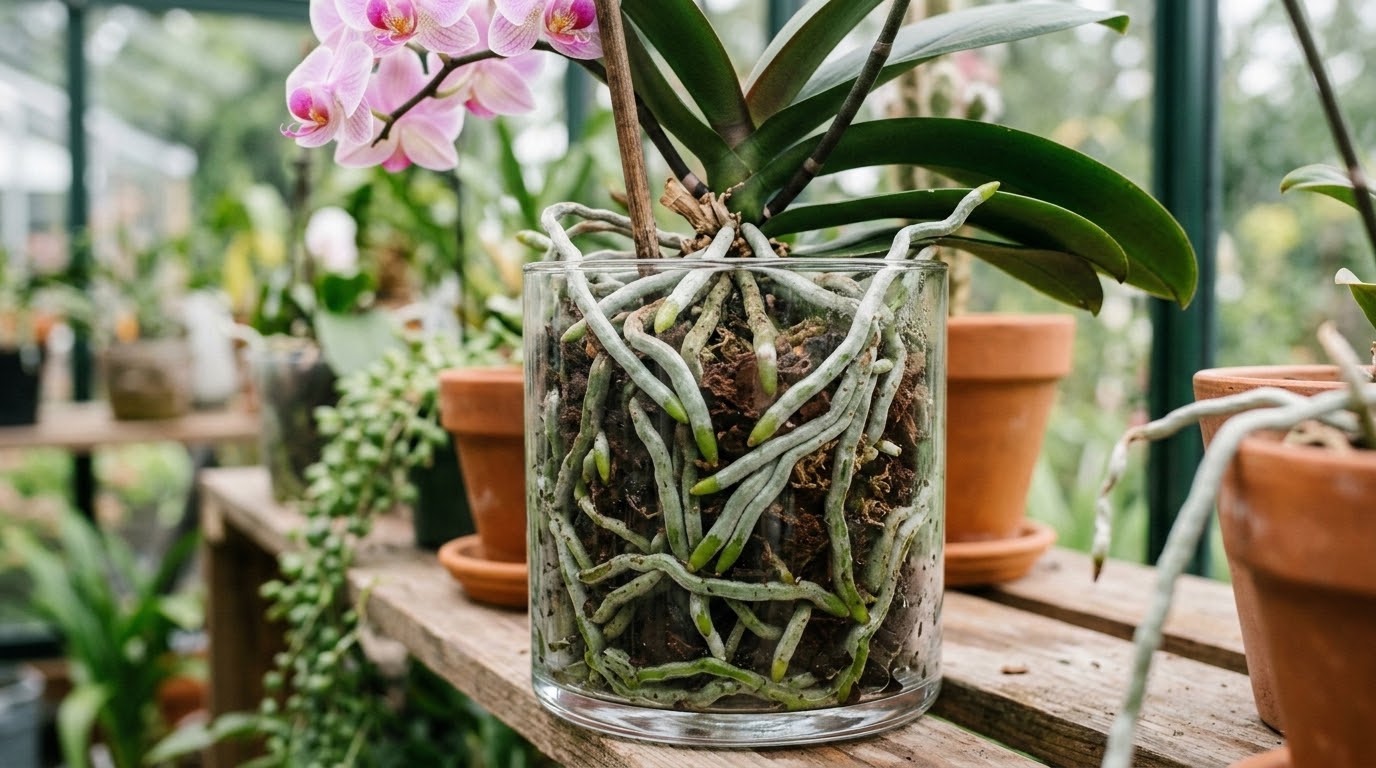
As raízes das orquídeas possuem uma camada especializada chamada velame. Este tecido esponjoso de células mortas é responsável por absorver umidade e nutrientes diretamente do ar e da água da chuva de forma extremamente rápida. O velame também atua como um escudo fisiológico contra patógenos e dessecação, além de funcionar como um isolante térmico durante secas intensas. Uma raiz saudável, firme e com pontas verdes ou esbranquiçadas é o principal indicador de que a planta está apta a processar a nutrição oferecida.
Fotossíntese Radicular
Em gêneros como Phalaenopsis, as raízes contêm clorofila e realizam fotossíntese quando expostas à luz. Por isso, o uso de vasos transparentes é frequentemente recomendado, permitindo monitorar a saúde radicular e auxiliar na produção de energia da planta. Essa capacidade de gerar energia através das raízes ajuda a planta a se recuperar mesmo quando perde parte de suas folhas por desidratação.
2. Decifrando a Nutrição: O Triângulo NPK e as Raízes
A base de qualquer fertilização bem-sucedida é a combinação de Nitrogênio (N), Fósforo (P) e Potássio (K). Para o fortalecimento das raízes, o equilíbrio desses elementos é fundamental.
Fósforo (P): O Arquiteto Radicular
O fósforo é essencial para o fortalecimento do sistema radicular. Ele atua na divisão celular e na transferência de energia dentro da planta, sendo crucial para a indução e sustentação da floração. Fórmulas ricas em fósforo (como NPK 10-30-20) são fundamentais para garantir a robustez das raízes.
Nitrogênio (N): O Motor do Crescimento
O nitrogênio estimula a produção de novas folhas e brotos vigorosos. Sem folhas saudáveis para realizar fotossíntese, as raízes não recebem os açúcares necessários para sua expansão. No entanto, o excesso de nitrogênio pode resultar em raízes moles e suscetíveis a pragas.
Potássio (K): O Defensor da Saúde
O potássio atua na regulação hídrica e no fortalecimento dos tecidos contra doenças. Ele permite que os processos metabólicos funcionem em harmonia, garantindo que a raiz suporte variações térmicas e períodos de seca.
Micronutrientes Essenciais
Embora necessários em menores quantidades, micronutrientes como Cálcio e Magnésio são vitais. O Cálcio, especificamente, é fundamental para a integridade da parede celular das pontas das raízes em crescimento; sua falta pode causar a morte das pontas radiculares (dieback), impedindo a absorção de nutrientes.
3. Estratégias de Adubação para um Sistema Radicular Forte
O sucesso na estimulação das raízes não reside apenas no produto aplicado, mas na técnica de aplicação.
A Regra do “Weekly, Weakly”
O princípio do “Weekly, Weakly” (semanalmente, fracamente) é a regra de ouro da nutrição indoor. Em vez de aplicar uma dose completa uma vez por mês, utiliza-se metade ou até 1/4 da dose com maior regularidade. Isso evita o acúmulo de sais minerais tóxicos que podem queimar o sensível velame das raízes.
A Técnica da Rega Prévia
Nunca aplique adubo químico em raízes secas. O velame seco é extremamente suscetível a queimaduras químicas. Sempre regue a planta com água pura primeiro, espere alguns minutos até que as raízes fiquem verdes ou saturadas, e só então aplique a solução fertilizante.
| Fase da Planta | Fórmula Sugerida | Objetivo para as Raízes |
|---|---|---|
| Crescimento Vegetativo | NPK 30-10-10 ou 20-20-20 | Suportar novas frentes de crescimento |
| Pré-Floração | NPK 10-30-20 | Fortalecer raízes para sustentar hastes |
| Manutenção Geral | Adubo Orgânico (Bokashi) | Manter a microbiota do substrato saudável |
4. O Papel Vital do Substrato na Nutrição e Enraizamento
O substrato não fornece alimento diretamente, mas serve como suporte físico e retém a adubação, mimetizando o ambiente natural.
Características de um Bom Substrato
- Drenagem Impecável: O acúmulo de líquidos sufoca as raízes e promove fungos.
- Aeração e Porosidade: As raízes precisam de oxigênio. Substratos que se compactam rapidamente são perigosos.
- Estabilidade e Longevidade: Materiais que apodrecem rápido alteram o pH e tornam-se tóxicos para o velame.
Componentes Comuns e Suas Funções
- Casca de Pinus: Oferece excelente aeração, mas deve ser trocada a cada 2 anos ao tornar-se ácida.
- Carvão Vegetal: Ajuda a manter a assepsia, filtra impurezas e mantém o substrato arejado.
- Musgo Esfagno: Atua como esponja, mantendo a umidade em climas secos, ideal para mudas ou plantas em recuperação.
- Pedra Brita: Excelente para o fundo do vaso para garantir que o dreno nunca entupa.
5. Cultivo em Árvores: O Habitat Original
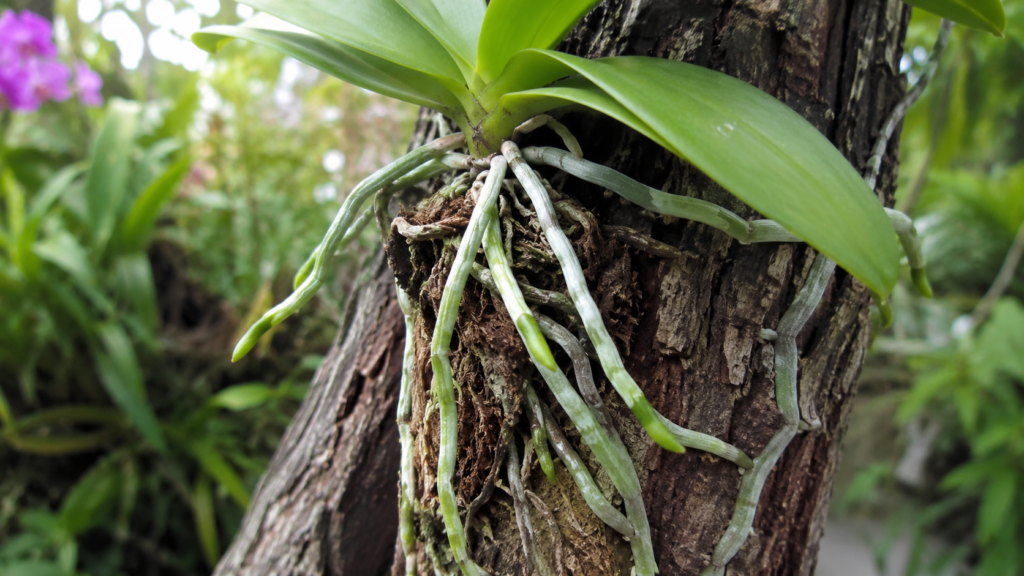
Plantar orquídeas diretamente em troncos de árvores elimina quase totalmente o risco de apodrecimento radicular por falta de oxigenação.
Escolha da Árvore Hospedeira
A textura da casca é o fator mais crítico. Árvores com casca grossa e rugosa, como o Flamboyant, Jacarandá e Jabuticabeira, são ideais. Deve-se evitar árvores que trocam de casca constantemente, como a Goiabeira ou o Eucalipto, pois a orquídea perderá sua fixação.
Técnica de Fixação
Ao fixar a orquídea em uma árvore, as raízes devem ser espalhadas sobre a casca e presas firmemente com materiais biodegradáveis ou elásticos (como tiras de meia-calça). Uma planta que balança não consegue enraizar, pois o movimento quebra as pontas novas e sensíveis das raízes em crescimento.
6. Diagnóstico de Saúde e Problemas Radiculares
A observação constante permite identificar se a estratégia de enraizamento está funcionando.
Sinais de Alerta
- Folhas Enrugadas: Geralmente indicam desidratação severa ou morte das raízes (por excesso de adubo ou água), impedindo a absorção de líquidos.
- Pontas Pretas: Sinal clássico de excesso de sais minerais ou adubação excessiva.
- Raízes Moles e Escuras: Indicação de podridão por excesso de água ou falta de oxigenação.
- Folhas em Acordeão: Em gêneros como Oncidium, sinalizam falta severa de água.
Cirurgia de Emergência para Salvar Raízes
Se as raízes apodrecerem, a ação deve ser imediata:
- Remoção: Retire a planta do vaso e remova todo o substrato antigo saturado de sais.
- Corte: Use tesouras esterilizadas com fogo para cortar todas as partes moles e escuras.
- Cicatrização: Aplique canela em pó nas feridas abertas; ela atua como um fungicida e bactericida natural eficaz.
- Replantio: Use um vaso menor e substrato novo e aerado para estimular o re-enraizamento.
7. Fatores Ambientais que Estimulam as Raízes
Luz e Ventilação
A luz é o combustível para a floração e para a produção de energia radicular. Folhas verde-alface vibrantes indicam o estado ideal para a fotossíntese eficiente. Além disso, a ventilação constante evita a estagnação de água e previne a podridão negra.
Umidade Controlada
Se uma planta estiver sem raízes, ela precisará absorver umidade pelas folhas. Borrifar água (sem encharcar o miolo) ajuda na manutenção da hidratação durante a fase de recuperação radicular.
8. Curiosidades e Fatos Fascinantes sobre Raízes
- Mimetismo Nutricional: Algumas espécies de Epidendrum focam todos os seus nutrientes no crescimento radicular e sementes, imitando o néctar de outras flores para atrair polinizadores sem gastar energia própria.
- A “Dama Dançante” Sedenta: As Oncidiums sinalizam a falta de água através de suas folhas em acordeão, um mecanismo de defesa para reduzir a área de transpiração.
- Longevidade: Com o cuidado radicular correto, uma Cattleya ou Cymbidium pode viver por décadas, tornando-se uma relíquia de família.
- Simbiose: Na natureza, muitas orquídeas dependem de fungos micorrízicos para germinar e crescer, uma relação de troca mútua de nutrientes essencial para a sobrevivência inicial.
- Orientação Magnética: Algumas espécies tendem a crescer voltadas para o lado onde o sol nasce, buscando a luz matinal menos agressiva.
9. Conclusão
Estimular o crescimento das raízes de orquídeas de forma natural é um exercício de paciência e observação das estações. A união entre o equilíbrio nutricional (NPK e micronutrientes) e a manutenção de um ambiente rico em oxigênio e luz é o segredo para transformar um simples vaso em um exemplar vigoroso.
Lembre-se sempre da máxima da orquidofilia: menos é mais. Uma adubação diluída e constante é sempre superior a um excesso esporádico. Ao respeitar o ciclo natural, garantir a lixiviação mensal do substrato (lavagem com água pura) e nunca fertilizar raízes secas, você assegura a longevidade e a exuberância dessas joias da natureza. Suas orquídeas retribuirão com raízes prateadas e flores que representam o ápice da perfeição botânica.
Deixe um comentário