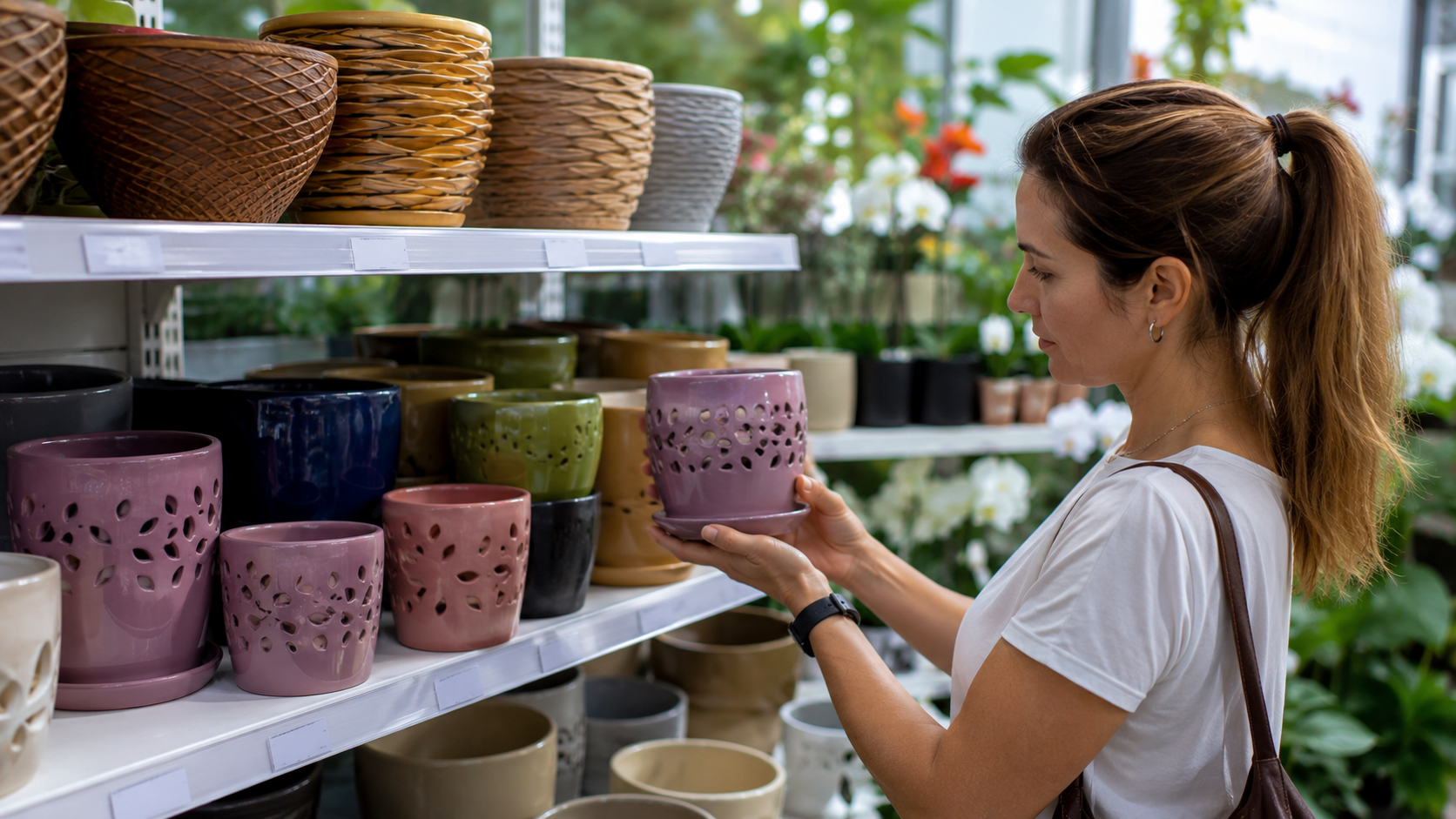
O cultivo de orquídeas é frequentemente descrito como uma arte que exige paciência, observação e, acima de tudo, compreensão técnica das necessidades biológicas da planta. Um dos pilares fundamentais para o sucesso de qualquer orquidófilo é a escolha do recipiente correto. Diferente das plantas terrestres comuns, a maioria das orquídeas comerciais possui exigências radiculares únicas que tornam o uso de vasos e terras comuns não apenas inadequado, mas frequentemente fatal para o espécime. Este artigo explora profundamente a ciência de como escolher vasos adequados, garantindo que suas plantas não apenas sobrevivam, mas prosperem com vigor.
1. Fundamentos Biológicos: A Raiz da Questão
Para entender por que a escolha do vaso é vital, devemos olhar para a natureza. A maioria das orquídeas populares, como as dos gêneros Cattleya e Phalaenopsis, são epífitas. Na natureza, elas não estão enterradas; suas raízes estão expostas, aderidas aos troncos das árvores, onde recebem luz, ventilação e água da chuva que escorre pela casca.
O Papel do Velame
As raízes das orquídeas são revestidas por uma camada esponjosa de células mortas chamada velame. Esta estrutura tem funções críticas:
- Absorção Rápida: Captura umidade e nutrientes da atmosfera ou da água que passa rapidamente pelas raízes.
- Proteção Térmica: Atua como um isolante contra variações extremas de temperatura e protege contra o sol intenso.
- Troca Gasosa: Permite que a raiz “respire”, algo essencial para evitar a podridão.
Dessa forma, o vaso não tem a função de alimentar a planta, mas sim de servir como um suporte físico que mimetiza o ambiente natural, mantendo a umidade necessária sem impedir a circulação de ar.
2. Tipos de Vasos e Suas Características
A escolha do material do vaso impacta diretamente a frequência de rega, a aeração das raízes e o desenvolvimento geral da planta.
Vasos de Plástico Transparente
Estes são amplamente recomendados para o gênero Phalaenopsis.
- Vantagens: Permitem que as raízes realizem fotossíntese (visto que as raízes de muitos gêneros ficam verdes quando expostas à luz e umidade) e facilitam o monitoramento visual da saúde radicular e da umidade do substrato.
- Desvantagens: Retêm a umidade por mais tempo, o que exige um controle rigoroso das regas para evitar o apodrecimento radicular.
Vasos de Barro (Cerâmica Terracota)
Excelentes para iniciantes e para regiões com alta umidade.
- Vantagens: A porosidade do barro ajuda na evaporação da água excessiva, permitindo que as raízes “respirem” melhor. São pesados, o que oferece estabilidade para orquídeas de grande porte que podem tombar facilmente.
- Desvantagens: O substrato seca mais rapidamente, o que pode ser um problema em climas muito áridos ou para plantas que exigem umidade constante.
Cachepots de Madeira
Estes recipientes imitam melhor o ambiente natural de epifitismo.
- Vantagens: Garantem ventilação total para as raízes. São esteticamente agradáveis e permitem que as raízes se entrelacem nas frestas da madeira, assim como fariam em um tronco de árvore.
- Desvantagens: Exigem regas muito frequentes, pois a água escorre e evapora quase instantaneamente.
Vasos de Plástico Opacos
Comuns em orquidários comerciais devido ao baixo custo.
- Vantagens: Leves e baratos. Mantêm a umidade de forma mais uniforme do que o barro.
- Desvantagens: Não permitem a fotossíntese radicular nem a inspeção visual das raízes sem retirar a planta do vaso.
3. Tamanho e Formato: A Estratégia de Crescimento
O vaso deve ser escolhido com base no hábito de crescimento da orquídea.
Crescimento Simpodial (Cattleya, Dendrobium, Oncidium)
Estas plantas crescem horizontalmente através de rizomas, produzindo novos pseudobulbos.
- Escolha do Vaso: Devem ser plantadas com a parte mais velha encostada na borda do vaso, deixando espaço na “frente” (onde surgem os novos brotos) para que a planta possa crescer por pelo menos dois anos antes de precisar de um novo transplante.
Crescimento Monopodial (Phalaenopsis, Vanda)
Crescem verticalmente a partir de um único ponto central.
- Escolha do Vaso: O vaso deve ser proporcional ao tamanho atual da planta, centralizando-a. Para Vandas, o uso de cestas suspensas com raízes totalmente aéreas é o mais indicado, sem o uso de substratos convencionais.
| Característica | Vasos de Plástico | Vasos de Barro | Cachepots de Madeira |
|---|---|---|---|
| Drenagem | Moderada (depende dos furos) | Alta (poroso) | Máxima (frestas) |
| Retenção de Umidade | Alta | Baixa | Muito Baixa |
| Aeração Radicular | Baixa a Média | Alta | Excelente |
| Durabilidade | Alta | Alta (mas quebra fácil) | Média (pode apodrecer) |
| Ideal para | Phalaenopsis, Mudas | Cattleyas, Climas úmidos | Vandas, Oncidiums |
4. Sinais de que é Hora de Trocar o Vaso
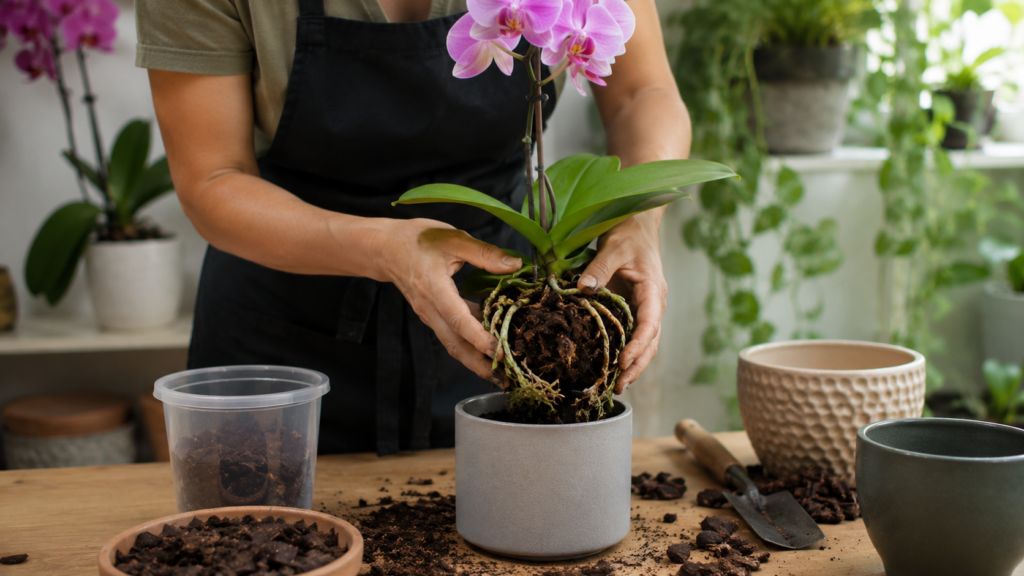
O transplante (ou replantio) não deve ser feito de forma aleatória, mas sim quando a planta apresenta indicadores claros de necessidade.
- Substrato Decomposto: Se o material (casca de pinus, carvão) parece terra preta ou está esfarelando, a acidez resultante pode estar queimando as raízes.
- Planta Saindo do Vaso: Quando novos pseudobulbos começam a crescer para fora da borda do vaso.
- Falta de Espaço: Raízes muito compactadas que começam a quebrar o vaso ou saem excessivamente pelos furos de drenagem.
- Interrupção do Crescimento: Se a planta está estagnada mesmo com adubação correta, pode haver problemas no ambiente radicular.
O melhor momento para o transplante é logo após a floração, quando a planta inicia um novo ciclo de crescimento vegetativo, com a emissão de novas raízes e brotos.
5. Curiosidades e Fatos Fascinantes
As orquídeas possuem adaptações que desafiam a lógica comum da jardinagem:
- Fotossíntese Radicular: Em gêneros como Phalaenopsis, as raízes expostas à luz ajudam a planta a gerar energia, funcionando como painéis solares biológicos.
- O Velame como Filtro: Além de absorver água, o velame protege o cilindro central da raiz contra variações térmicas, agindo como um isolante durante secas intensas.
- A “Dama Dançante” Sedenta: As Oncidiums sinalizam a falta de água através de suas folhas em formato de “acordeão”, um mecanismo físico para reduzir a área de transpiração e conservar umidade.
- Orquídeas “Sem Teto”: Algumas espécies, como a Vanda coerulea, produzem um azul verdadeiro, uma cor rara, e preferem viver penduradas apenas pelo ar, sem qualquer vaso ou substrato.
6. Cuidados ao Preparar o Vaso
Antes de colocar sua orquídea em um novo “lar”, siga estes protocolos de segurança:
- Higienização: Esterilize todas as ferramentas de corte com fogo antes de iniciar. Isso evita a propagação de vírus e fungos entre as plantas.
- Drenagem Impecável: A água deve passar livremente pelo vaso. O acúmulo de líquidos no fundo sufoca as raízes e promove o crescimento de fungos patogênicos. Use pedra brita ou cacos de cerâmica no fundo para garantir que a água não acumule.
- Cicatrizante Natural: Ao podar raízes mortas (moles ou escuras), aplique canela em pó nos cortes. Ela age como um cicatrizante natural e fungicida.
7. Diagnóstico de Problemas Relacionados ao Vaso
| Sintoma | Causa Provável | Solução Sugerida |
|---|---|---|
| Raízes escuras e moles | Excesso de água ou drenagem ruim | Trocar por vaso de barro; reduzir regas |
| Folhas enrugadas | Desidratação ou raízes mortas | Verificar se o vaso é pequeno demais; aumentar umidade |
| Manchas pretas circulares | Ataque de fungos por má ventilação | Usar vasos com furos laterais; melhorar circulação de ar |
| Botões caindo | Mudança brusca de temperatura | Evitar mover o vaso para locais com correntes de ar frio |
8. Conclusão
Escolher o vaso adequado para uma orquídea é mais do que uma questão estética; é um gesto de cuidado e personalização que permite entender profundamente a biologia dessas plantas fascinantes. Ao equilibrar a aeração, a drenagem e a retenção de umidade de acordo com a espécie e o ambiente de cultivo, você fornece à orquídea a base necessária para que ela direcione sua energia para o crescimento vigoroso e florações espetaculares.
Seja através da porosidade de um vaso de barro para uma robusta Cattleya ou da transparência de um vaso plástico para uma delicada Phalaenopsis, o segredo reside na sintonia fina com a planta: ela sempre comunicará suas necessidades através da cor de suas raízes e do aspecto de suas folhas. Com paciência e seguindo os protocolos de limpeza e manejo, seu orquidário se tornará um refúgio de renovação constante.
Lembre-se sempre de documentar o progresso de suas plantas para entender melhor o ritmo de vida dessas maravilhas exóticas.
Deixe um comentário