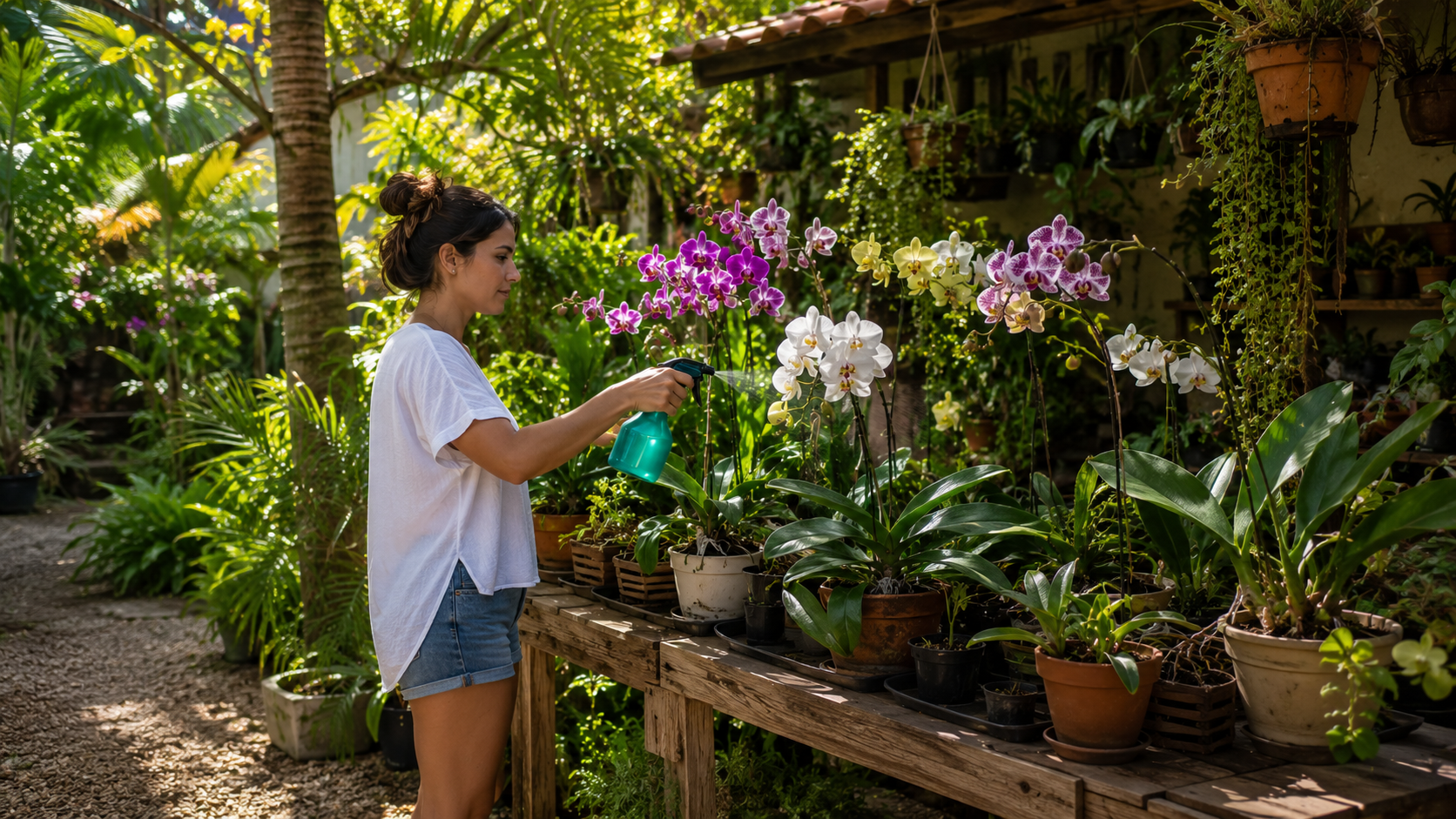
O verão é, para muitas espécies de orquídeas, o ápice de sua atividade metabólica. No entanto, para o cultivador, esta estação representa um desafio técnico monumental. O equilíbrio entre luz solar intensa, temperaturas elevadas e a necessidade crítica de hidratação exige uma compreensão profunda da fisiologia botânica. Manter uma orquídea saudável sob o sol de 35°C não é apenas uma questão de rega, mas de gestão de microclimas e proteção celular.
Neste guia explicativo, exploraremos as estratégias essenciais de como cuidar de orquídeas no verão, para transformar sua coleção em um oásis de resiliência, garantindo que o calor tropical seja um aliado do crescimento, e não um vetor de estresse ou doença.
1. A Fisiologia da Orquídea perante o Calor
Para proteger uma planta, primeiro devemos entender como ela funciona. As orquídeas, em sua maioria epífitas, desenvolveram mecanismos evolutivos sofisticados para sobreviver em ambientes onde a água é passageira e a luz é abundante.
O Papel do Velame como Isolante Térmico
As raízes das orquídeas são revestidas pelo velame, uma camada de células mortas que atua como uma esponja. No verão, o velame não apenas absorve umidade, mas também protege o cilindro central da raiz contra variações bruscas de temperatura, agindo como um escudo térmico natural. Quando o velame está prateado, a planta está em modo de conservação; quando verde, está processando energia.
Estruturas de Armazenamento: Pseudobulbos vs. Crescimento Monopodial
A forma como uma orquídea armazena água define sua resistência ao verão:
- Crescimento Simpodial (ex: Cattleya, Oncidium): Possuem pseudobulbos, que são verdadeiros tanques de reserva. Essas plantas suportam melhor dias de calor seco intenso porque têm “estoques” internos.
- Crescimento Monopodial (ex: Vanda): Crescem a partir de um único ponto central e não possuem pseudobulbos. Isso as torna extremamente vulneráveis à desidratação rápida, exigindo atenção diária ou até mesmo bi-diária no verão.
2. O Domínio da Luz e do Sombreamento
A luz solar é o combustível da floração, mas no verão, a radiação ultravioleta pode ser letal. O excesso de fótons pode causar queimaduras irreversíveis nos tecidos foliares.
Diagnóstico pela Cor das Folhas
A observação constante é a ferramenta mais barata e eficaz do orquidófilo:
- Verde Alface Vibrante: O estado ideal de equilíbrio fotossintético.
- Verde Escuro Intenso: Indica que a planta está recebendo pouca luz. No verão, isso pode ser um sinal de que você a protegeu demais, o que impedirá florações futuras.
- Amarelado ou Manchas Marrons Secas: Queimadura solar. A folha está sofrendo lise celular devido ao calor excessivo.
Telas de Sombreamento (Sombrite)
Em varandas ou jardins expostos, o uso de telas com 70% a 80% de filtragem é recomendado para a maioria das espécies. Essas telas quebram a intensidade dos raios solares sem impedir a circulação de ar, que é vital para o resfriamento da folhagem.
3. Hidratação Estratégica: A Ciência da Rega no Verão
Regar no verão não é uma tarefa mecânica; é um ato de sincronia com o clima. A água parada em combinação com o calor é o gatilho perfeito para a podridão bacteriana.
O Cronograma Ideal
A regra de ouro é regar preferencialmente no início da manhã. Isso permite que:
- A planta se hidrate antes do pico de calor do meio-dia.
- A água acumulada nas axilas das folhas ou no “miolo” (ápice) evapore durante o dia, prevenindo a temida podridão negra.
Métodos de Saturação
- Imersão: Para plantas em cestos ou com raízes nuas (como as Vandas), mergulhar as raízes em um balde com água por 15 a 20 minutos garante a saturação total do velame.
- Aspersão: Molhar as folhas e o ambiente ao redor ajuda a baixar a temperatura por evaporação, mas deve ser feito com cautela para não criar focos de fungos.
| Parâmetro de Cultivo no Verão | Nível Recomendado | Observação Técnica |
|---|---|---|
| Luminosidade | 70% a 80% (Filtrada) | Evitar sol direto entre 11h e 15h |
| Umidade do Ar | 60% a 80% | Usar bandejas com brita e água para elevar a umidade local |
| Frequência de Rega | Diária ou 2x ao dia | Depende da espécie (Vandas precisam de mais) |
| Ventilação | Moderada e constante | Vital para o resfriamento foliar e prevenção de fungos |
4. Ventilação: O Resfriamento Natural
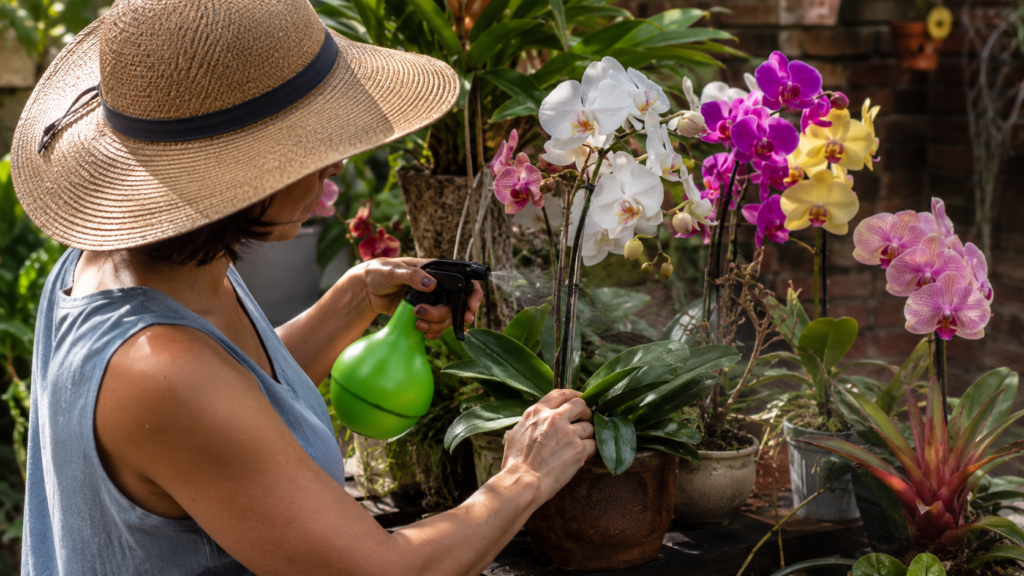
Diferente de muitas plantas ornamentais, as orquídeas precisam de ar em movimento constante. No verão, a ventilação atua como um sistema de ar-condicionado biológico.
A Importância da Brisa
O movimento do ar facilita a transpiração da planta, o que ajuda a baixar a temperatura interna de suas células. Em ambientes fechados ou varandas muito protegidas, o ar estagnado pode “cozinhar” a planta por dentro. No entanto, deve-se evitar ventos excessivamente fortes, especialmente em andares altos, que podem “sugar” a umidade da planta mais rápido do que o velame consegue repor.
5. Nutrição e Fortalecimento na Estação de Crescimento
Como o metabolismo está acelerado, o verão é a época de “alimentar” as orquídeas para que elas acumulem energia para as próximas florações.
O Método “Weekly, Weakly”
A recomendação técnica é adubar semanalmente, mas com uma dose muito diluída (metade ou um quarto da recomendação do fabricante). Isso evita o acúmulo de sais minerais nas raízes, que podem causar queimaduras químicas em dias de calor intenso.
- Fórmulas de Crescimento: Use NPK 30-10-10 ou 20-20-20 para estimular novos brotos e raízes.
- Hidratação Prévia: Nunca aplique adubo em uma planta seca. Sempre regue com água pura primeiro para hidratar o velame e permitir uma absorção mais suave dos nutrientes.
6. Prevenção de Pragas e Doenças de Verão
O calor e a umidade elevada são o paraíso para patógenos e insetos sugadores.
Doenças Comuns
- Podridão Negra: Causada pelo fungo Pythium ou Phytophthora, progride velozmente em condições de calor e água parada.
- Podridão Mole: De origem bacteriana, transforma os tecidos em uma massa viscosa em poucas horas.
- Ácaros: Surgem principalmente em verões secos e ambientes com pouca circulação de ar, deixando as folhas com aspecto prateado ou poeirento.
O Tripé da Prevenção: Higiene, Ambiente e Manejo
- Higiene: Esterilize tesouras com fogo antes de qualquer corte para não transmitir vírus e bactérias.
- Ambiente: Garanta ventilação e luminosidade adequadas para fortalecer o sistema imunológico da planta.
- Manejo: Evite ferimentos desnecessários nas plantas, que servem de porta de entrada para invasores.
7. Cuidados Específicos por Gênero no Verão
Nem toda orquídea reage ao verão da mesma forma. A personalização do cuidado é o segredo do colecionador experiente.
Orquídeas Vanda
Como vivem com raízes nuas e não possuem pseudobulbos, as Vandas são as que mais sofrem no verão. Elas podem precisar de duas regas diárias abundantes. O sinal de alerta são raízes que permanecem prateadas mesmo após uma rega leve.
Orquídeas Oncidium (“Chuva de Ouro”)
As Oncidiums sinalizam a falta de água através de suas folhas em “acordeão” (enrugadas horizontalmente). Elas preferem um ciclo de “molhado e seco”, mas no verão, o período seco deve ser muito curto.
Orquídeas Cymbidium
Conhecidas como “comilonas”, as Cymbidiums precisam de adubação rica em nitrogênio no verão para sustentar seu grande volume de biomassa. Elas suportam temperaturas mais altas se a umidade ambiente for mantida acima de 60%.
Orquídeas Phalaenopsis
Preferem ambientes mais sombreados e substratos que retenham umidade leve, mas sem encharcar as raízes, o que causaria apodrecimento imediato.
8. Curiosidades e Fatos Fascinantes
As orquídeas possuem segredos que aumentam nosso fascínio por seu cultivo:
- Simbolismo Histórico: Na China antiga, Confúcio descrevia a orquídea (especificamente a Cymbidium) como um símbolo de virtude e refinamento, comparando seu perfume à companhia de pessoas nobres.
- Cores Raras: A Vanda coerulea é uma das raríssimas plantas na natureza que produz um azul verdadeiro, uma cor extremamente incomum no reino vegetal.
- Resiliência Epífita: Algumas orquídeas podem sobreviver meses sem chuva em seu habitat natural, entrando em dormência profunda, mas no cultivo doméstico, o objetivo é evitar esse estresse para garantir florações anuais.
9. Conclusão: A Arte da Observação
Cuidar de orquídeas no verão é, acima de tudo, um exercício de paciência e sintonia fina com a natureza. Não existe uma fórmula mágica ou um calendário fixo; existe a capacidade do cultivador de “ler” o que a planta diz através da cor de suas raízes, da firmeza de suas folhas e da vivacidade de seus brotos.
Ao respeitar o tripé fundamental — Higiene, Ambiente e Manejo — e ajustar sua rotina para proteger as plantas do calor extremo, você garante que sua varanda ou jardim se torne um refúgio de beleza exuberante. Lembre-se: uma orquídea bem hidratada e nutrida no verão é a promessa de uma floração espetacular nas estações seguintes.
Deixe um comentário