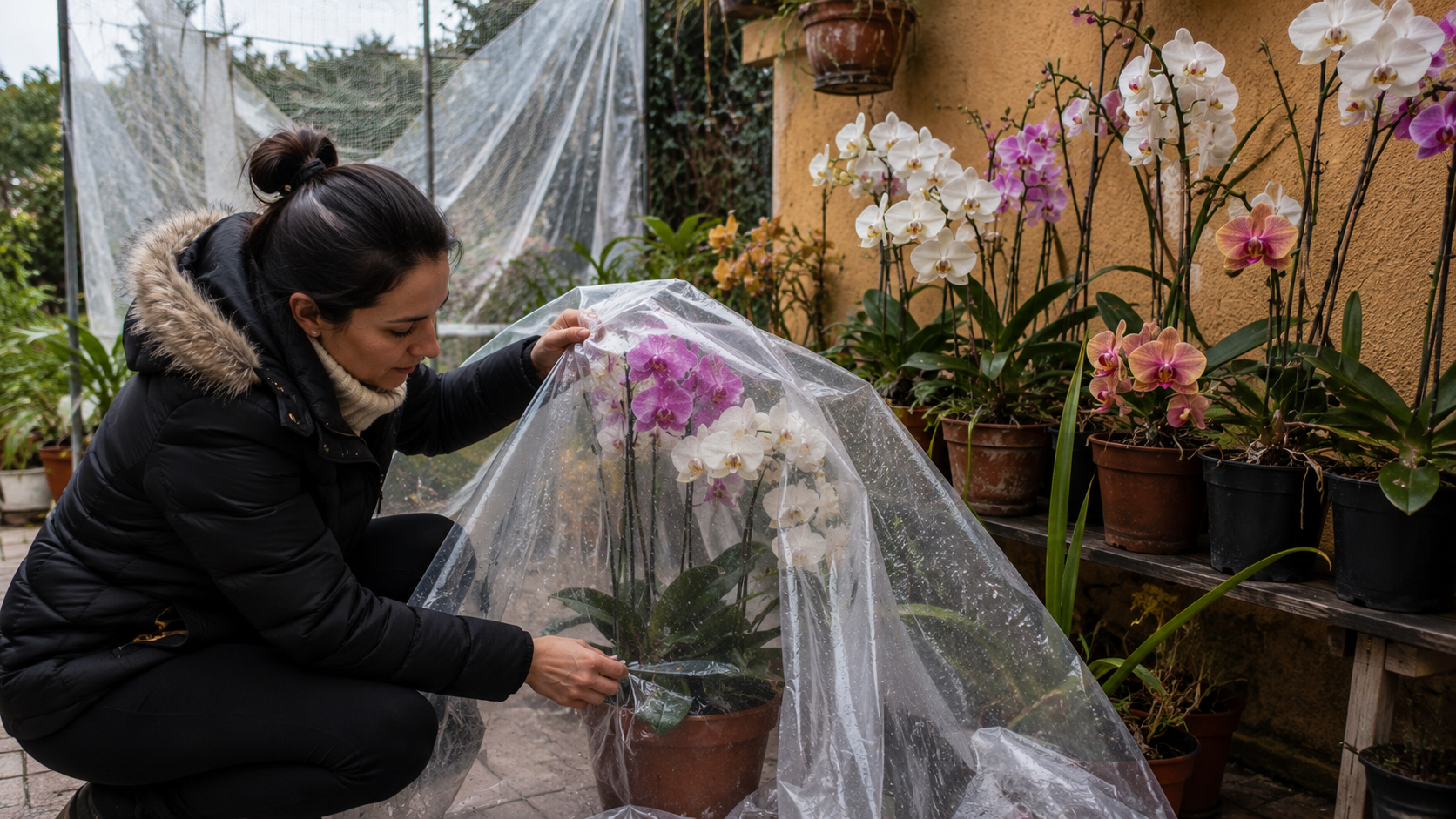
As orquídeas são frequentemente descritas como as joias do reino vegetal devido à sua beleza exuberante e formas complexas. No entanto, essa sofisticação estética esconde uma vulnerabilidade biológica significativa que se torna ainda mais evidente durante o inverno. Para o orquidófilo, a transição para os meses frios exige um olhar atento e um manejo preventivo rigoroso, uma vez que a maioria das espécies cultivadas possui origens tropicais e subtropicais.
O inverno não traz apenas o frio; ele altera drasticamente a incidência de luz, a umidade relativa do ar e o metabolismo das plantas. Enquanto algumas espécies entram em dormência profunda, outras escolhem justamente este período para presentear o cultivador com florações espetaculares. Compreender a fitopatologia aplicada e os protocolos de prevenção durante esta estação não é apenas uma recomendação, mas um pilar essencial para o sucesso no cultivo.
1. Fisiologia da Orquídea no Inverno: O Papel do Velame e das Raízes
Para prevenir doenças e garantir a sobrevivência durante o frio, é fundamental entender a fisiologia ideal da planta. As orquídeas possuem estruturas únicas que as diferenciam de outras plantas domésticas e que desempenham papéis cruciais sob estresse térmico:
- O Velame: As raízes são cobertas por uma camada esbranquiçada chamada velame. Esta estrutura funciona como uma esponja protetora e um escudo fisiológico crucial para a absorção de nutrientes e proteção contra invasores. No inverno, o velame ajuda a isolar termicamente a raiz interna, mas sua capacidade de absorção diminui com a queda de temperatura.
- Hábito Epífito: Como a maioria das orquídeas vive originalmente sobre árvores, suas raízes necessitam de alta ventilação. No inverno, o substrato encharcado combinado com o frio é letal, pois o velame saturado impede a troca gasosa e favorece o apodrecimento.
- Folhagem e Metabolismo: Uma orquídea saudável deve apresentar folhas firmes e com coloração característica. Durante o frio, o metabolismo desacelera, o que significa que a planta processa menos água e nutrientes. O excesso de adubação ou rega neste período pode levar à toxicidade ou sufocamento radicular.
2. Estratégias de Manejo: Os Pilares da Proteção
O sucesso no cultivo invernal baseia-se no tripé Higiene, Ambiente e Manejo. Abaixo, detalhamos as ações críticas para manter sua coleção segura.
I. Rega Consciente e Cronometrada
A água é o principal vetor de doenças, especialmente quando as temperaturas caem. O acúmulo de água parada nas axilas das folhas ou no “olho” da planta é o maior gatilho para a podridão mole.
- Ação: Regue preferencialmente no início da manhã. Isso permite que a planta tenha o dia todo para secar antes da queda brusca de temperatura noturna.
- Precaução: Se a água cair no miolo, é vital secar manualmente com papel absorvente. No inverno, a evaporação é lenta e o risco de infecções fúngicas é exponencialmente maior.
II. Ventilação vs. Correntes de Ar
Ambientes abafados impedem a secagem rápida dos tecidos e do substrato, criando o microclima ideal para fungos e bactérias oportunistas.
- Equilíbrio: Garanta que a planta esteja exposta a uma brisa leve constante, mas proteja-a de correntes de ar polar excessivas que podem causar estresse hídrico e queima das pontas das folhas.
- Circulação Interna: Se cultivar dentro de casa ou apartamentos, o uso de ventiladores pequenos em velocidade mínima pode ajudar a evitar que o ar fique estagnado ao redor das raízes.
III. O Desafio da Iluminação
A luz solar insuficiente enfraquece o sistema imunológico da planta. Como o sol de inverno tem uma inclinação diferente e menos horas de brilho, as orquídeas podem sofrer por falta de energia para manter seu metabolismo básico.
- Ação: Mova suas plantas para locais onde recebam luz indireta brilhante por mais tempo. Espécies como Cattleya e Dendrobium podem precisar de uma exposição mais próxima às janelas voltadas para o norte (no hemisfério sul) para compensar a baixa luminosidade.
3. Prevenção de Doenças e Identificação de Patógenos
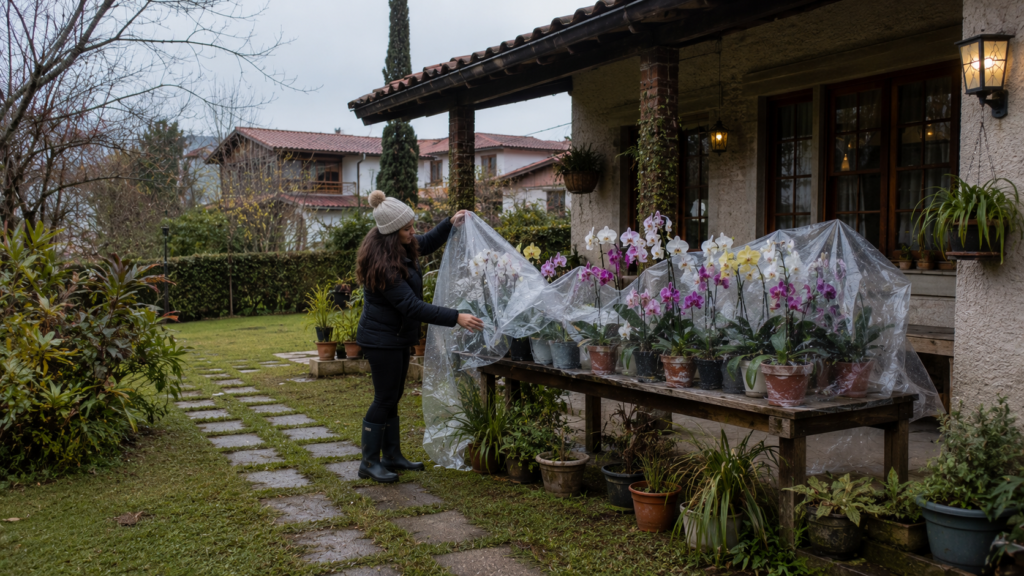
Bactérias e fungos são oportunistas e extremamente velozes no frio úmido. Identificar corretamente o problema é o primeiro passo para o diagnóstico e tratamento eficaz:
Comparativo de Patógenos Comuns no Inverno
| Doença | Agente | Sintoma Visual | Odor |
|---|---|---|---|
| Podridão Mole | Erwinia spp. | Tecido viscoso e translúcido | Forte e fétido |
| Mancha Marrom | Acidovorax | Manchas circulares bem definidas | Ausente ou leve |
| Podridão Negra | Phytophthora | Tecido preto e endurecido | Terroso |
| Desidratação | Erro Manejo | Folhas enrugadas e moles | Inexistente |
Para evitar essas condições, o uso de cicatrizantes naturais é essencial. Qualquer corte ou ferida deve ser selado imediatamente com canela em pó, que possui propriedades fungicidas e bactericidas naturais potentes. Além disso, a esterilização rigorosa de ferramentas com fogo (calor) é o método mais eficaz para evitar a transmissão humana de patógenos entre as plantas.
4. Particularidades por Espécie
Diferentes gêneros reagem de formas distintas ao frio:
- Phalaenopsis: Preferem ambientes mais sombreados e substratos que retenham umidade leve. No inverno, são extremamente sensíveis a temperaturas abaixo de 15°C, podendo perder botões florais se expostas a choques térmicos.
- Cymbidium: São as “rainhas do inverno”. Curiosamente, muitas espécies deste gênero necessitam de uma queda de temperatura noturna para induzir a floração. O simbolismo histórico da Cymbidium remonta à China antiga, onde Confúcio a descrevia como símbolo de virtude e refinamento.
- Vanda: Possuem raízes aéreas que dependem criticamente da circulação de ar. A Vanda coerulea é uma das raríssimas plantas na natureza que produz um azul verdadeiro e possui uma resiliência notável, mas ainda assim exige proteção contra geadas.
5. Curiosidades e Fatos Fascinantes
- Resiliência Epífita: Algumas orquídeas podem sobreviver meses sem chuva em seu habitat natural ao entrarem em dormência profunda. No cultivo doméstico, o objetivo é evitar esse estresse extremo para garantir florações anuais.
- Bactérias Benéficas: Nem todas as bactérias são inimigas; existem rizobactérias que vivem em simbiose com as raízes, auxiliando na absorção de nutrientes mesmo em temperaturas mais baixas.
- O Poder da Canela: Embora pareça um truque doméstico, a canela é amplamente reconhecida na orquidofilia técnica como um dos melhores agentes cicatrizantes para cortes de poda, essencial após a remoção de tecidos doentes.
6. Conclusão: A Arte da Observação
Cultivar orquídeas no inverno é, acima de tudo, um exercício de paciência e sintonia fina com a natureza. Não existe uma fórmula mágica ou um calendário fixo, mas sim a capacidade do cultivador de “ler” o que a planta diz através da cor de suas raízes e da firmeza de suas folhas.
Ao dominar as técnicas de diagnóstico e aplicar os cuidados preventivos — como a rega matinal, a ventilação estratégica e a higiene rigorosa — o cultivador transforma seu espaço em um santuário para estas “rainhas da natureza”. Lembre-se: cada nova raiz verde e brilhante que surge após um inverno rigoroso é a recompensa direta de um manejo feito com conhecimento, dedicação e respeito aos ciclos biológicos.
Deixe um comentário