Quando as temperaturas começam a cair e o inverno se aproxima, é comum que os apaixonados por plantas sintam um frio na barriga. Se você cultiva orquídeas, sabe que elas são, em sua grande maioria, plantas de origem tropical. Elas amam o calor, a luz e a umidade. Então, o que acontece quando o termômetro despenca?
Muitos cultivadores iniciantes entram em pânico ao verem suas plantas estagnarem durante os meses mais frios, achando que elas estão morrendo. Mas fique tranquilo! As orquídeas são muito mais resistentes do que a fama delas sugere. Elas têm mecanismos naturais para lidar com a queda de temperatura, desde que você faça pequenos ajustes na sua rotina de cuidados.
Neste guia completo e prático, vamos desvendar os segredos de como proteger orquídeas do frio. Você aprenderá a adaptar a rega, evitar os perigos invisíveis do inverno e até descobrirá como o clima gelado pode ser o grande responsável pela próxima floração espetacular da sua planta.
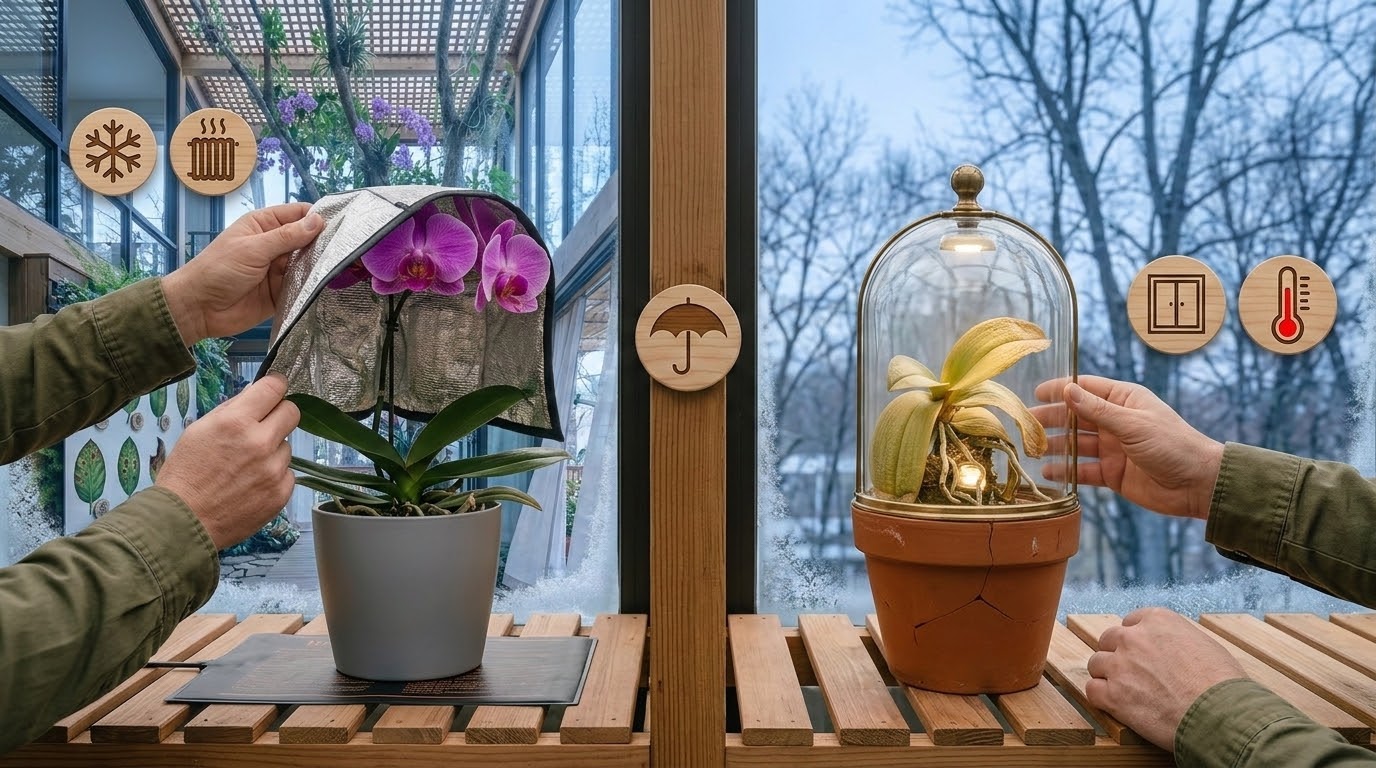
Legenda: Trazer suas orquídeas para o interior da casa perto de uma janela bem iluminada é o primeiro passo para protegê-las do frio externo.
1. A Regra de Ouro do Inverno: Reduza a Rega
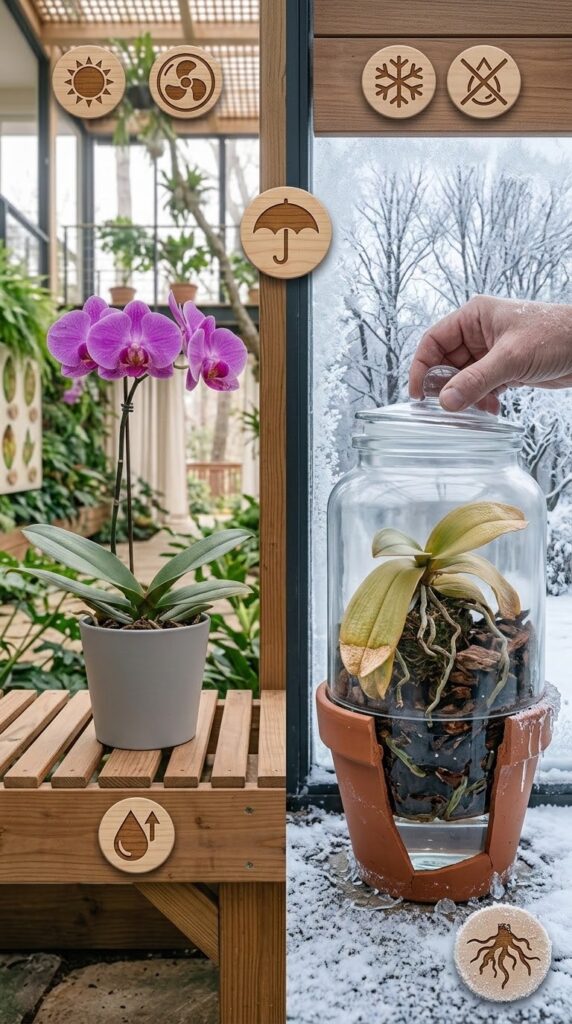
Se o excesso de água já é o maior inimigo das orquídeas no verão, no inverno ele se torna fatal. Quando a temperatura cai, o metabolismo da planta desacelera e ela entra em uma espécie de “repouso”. Ela consome muito menos água e nutrientes. Além disso, a água que fica no substrato (a casca de pinus no vaso) demora muito mais tempo para evaporar.
Se você continuar regando a sua orquídea com a mesma frequência dos dias quentes, as raízes ficarão encharcadas, gelarão e, inevitavelmente, apodrecerão.
Como regar no frio:
- Aumente o intervalo: Se você regava uma vez por semana, é bem provável que agora precise regar a cada 10 ou até 15 dias.
- O Teste do Dedo é obrigatório: Nunca regue por hábito. Afunde o dedo no substrato; só coloque água se estiver completamente seco.
- Regue de manhã: Se precisar regar, faça isso nas primeiras horas da manhã. Assim, a planta tem o dia todo para escorrer o excesso de água antes do frio intenso da madrugada. Nunca regue à noite!
2. Corte as Correntes de Vento Gelado
As orquídeas suportam temperaturas baixas de forma surpreendente (algumas aguentam até 10°C sem grandes problemas), mas o que realmente causa danos imediatos é o vento gelado.
Aquele vento cortante que entra pela fresta da janela rouba a umidade das folhas muito rapidamente, causando desidratação severa. As folhas podem ficar com um aspecto enrugado, murcho e, em casos extremos, apresentar queimaduras de frio (manchas escuras e moles).
Como proteger:
- Se as suas plantas ficam na varanda ou perto de janelas abertas, mude-as de lugar temporariamente.
- Traga os vasos para o interior da casa ou deixe-os em um canto mais protegido onde a circulação de ar seja suave, mas sem correntes diretas.
Legenda: Folhas firmes e brilhantes indicam que a planta está bem hidratada. No inverno, o substrato deve secar completamente entre as regas.
3. O Perigo Máximo: Protegendo Contra a Geada
Para quem mora na região Sul do Brasil ou em áreas serranas onde os termômetros chegam perto de 0°C, a geada é o sinal de alerta máximo. A geada ocorre quando o orvalho congela sobre a planta. Esse gelo congela a água dentro das células da folha, que estouram. No dia seguinte, a folha amanhece com aspecto de “cozida” e preta, e a planta raramente sobrevive.
O que fazer em noites de geada:
- O interior da casa é o porto seguro. Coloque as orquídeas na sala, na cozinha ou no quarto, longe das janelas de vidro que irradiam frio.
- Se você tem muitas orquídeas em um quintal e não pode guardá-las, cubra-as com TNT (tecido não tecido) ou lonas plásticas durante a noite. Lembre-se de retirar a cobertura assim que o sol nascer para que as plantas possam respirar e não assem com o calor da manhã.
4. Evite Adubações Pesadas
Como mencionamos, no inverno a orquídea está descansando. Se você aplicar a mesma quantidade de adubo que usava na primavera, a planta simplesmente não conseguirá absorvê-lo. O resultado? O excesso de sais minerais do adubo vai se acumular no substrato e queimar as raízes sensíveis.
- Suspenda ou reduza a adubação pela metade durante os meses mais rigorosos do inverno.
- Volte com a rotina normal de nutrição apenas quando os dias começarem a esquentar e você notar o surgimento de pontinhas verdes nas raízes (sinal de que ela “acordou”).
Legenda: O choque térmico do frio é frequentemente o gatilho natural que a orquídea precisa para iniciar a produção de novas flores.
5. O Lado Bom do Frio: O Gatilho da Floração
Aqui está um dos fatos mais fascinantes sobre o cultivo de orquídeas, especialmente as do tipo Phalaenopsis (as mais comuns em supermercados): elas precisam do frio para florir!
É a variação térmica do outono e do inverno (dias agradáveis e noites mais frias) que envia uma mensagem química para a planta: “Atenção, o clima mudou. É hora de produzir uma haste floral”.
Portanto, não se desespere se a sua planta não crescer folhas novas durante o inverno. Se você cuidou bem dela, não exagerou na água e a protegeu dos ventos fortes, é exatamente após essa fase de frio que ela vai te presentear com o surgimento de uma haste verde que, em poucas semanas, estará carregada de flores maravilhosas.
Conclusão: Paciência e Observação
Cuidar de orquídeas no inverno não exige malabarismos; exige apenas a compreensão de que o ciclo da natureza mudou. Ao reduzir a água, cortar as correntes de vento e proporcionar um ambiente estável dentro de casa, você garante o bem-estar das suas plantas. Abrace essa estação mais lenta e prepare-se para o espetáculo de cores que, com certeza, chegará na primavera.
Deixe um comentário